Le mouvement DadaMarcel Duchamp
|
Le mouvement Dada - Berlin, Cologne, Hanovre, HollandeBerlin |
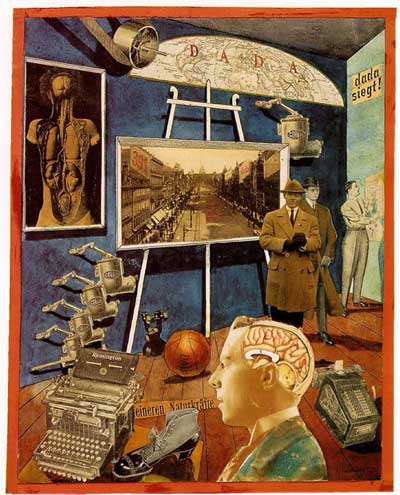 |
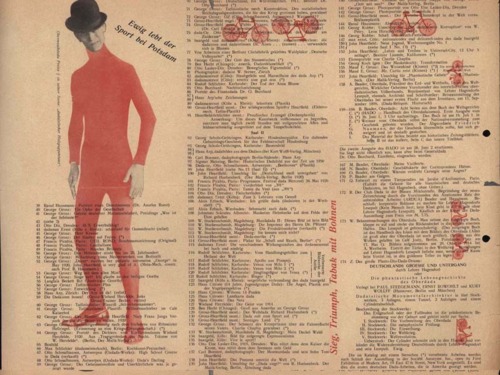
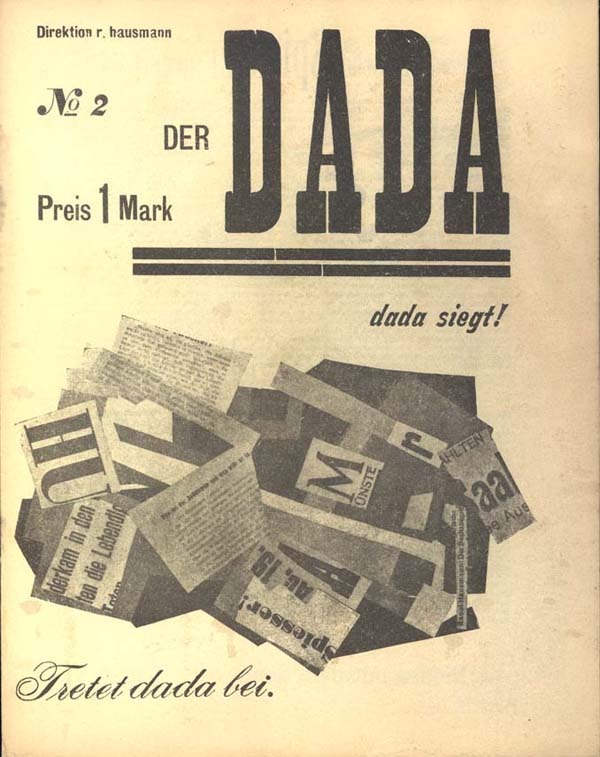
Raoul Hausmann - Dada siegt! |
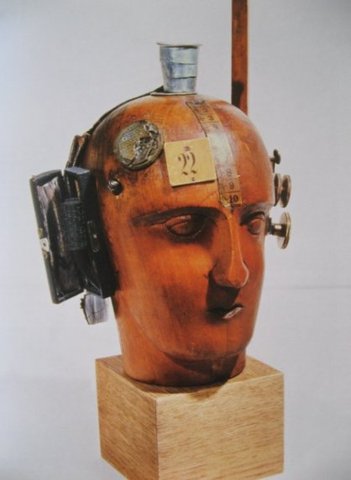 |
Raoul Hausmann - Tête mécanique 1919-1920. |
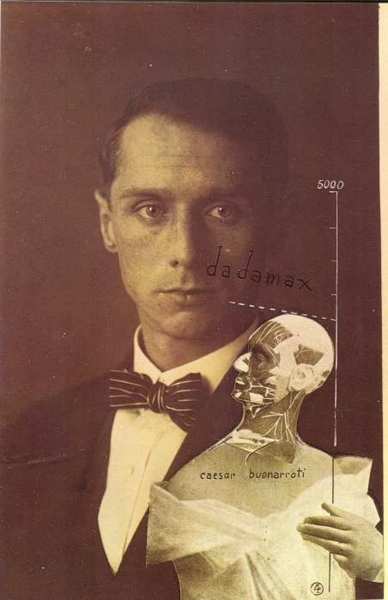
C'est Hans Richter et Richard Huelsenbeck qui, en 1917, importèrent le virus à Berlin où ils trouvèrent un bouillon de culture éminemment favorable dans un petit groupe libertaire composé de Raoul Hausmann, Franz Jung, Johannes Baader, George Grosz, John Heartfield et d'une dizaine de jeunes intellectuels plus ou moins frais émoulus du Sturm d'Herwarth Walden.
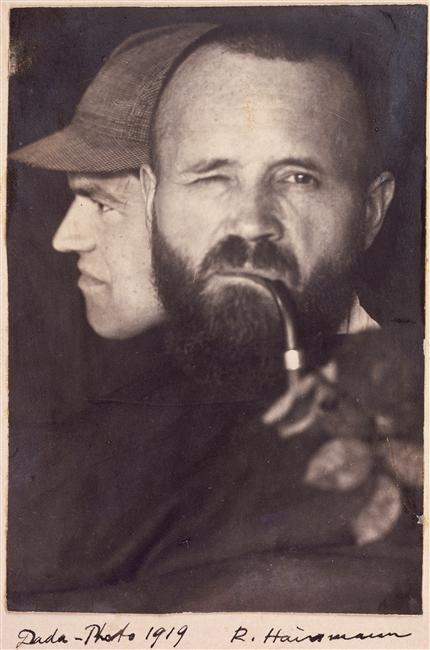 |
Raoul Hausmann et Johannes Baader, 1919
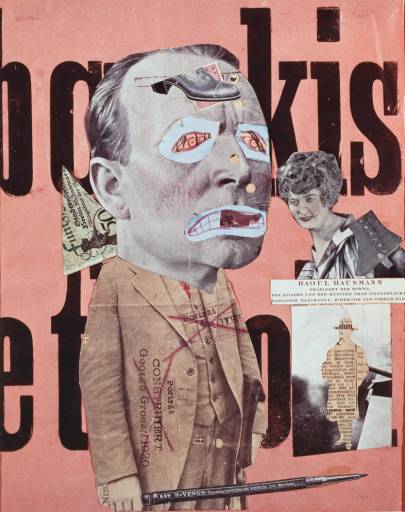
Raoul Hausmann - Le Critique d'art - Der Kunstkritiker 1919-20
Hausmann, membre fondateur du groupe dada berlinois, développa le photomontage comme outil de satire et de protestation politique. L'image du "critique d'art", quoique identifié par un timbre comme étant George Grosz, fut probablement un personnage anonyme découpé dans un périodique. Le fragment de billet de banque allemand derrière le cou du critique suggère qu'il fut contrôlé par des forces capitalistes. Les mots du fond font partie d'un poème-affiche créé par Hausmann dans le but d'être collé sur les murs de Berlin.
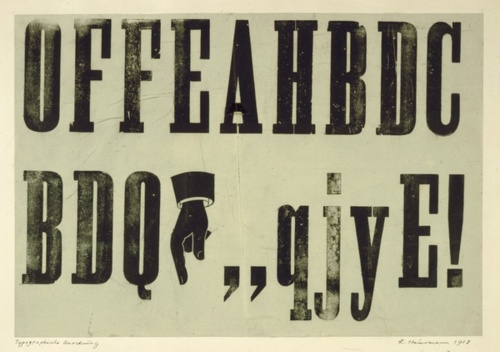
Raoul Hausmann - Poème phonétique - 1918
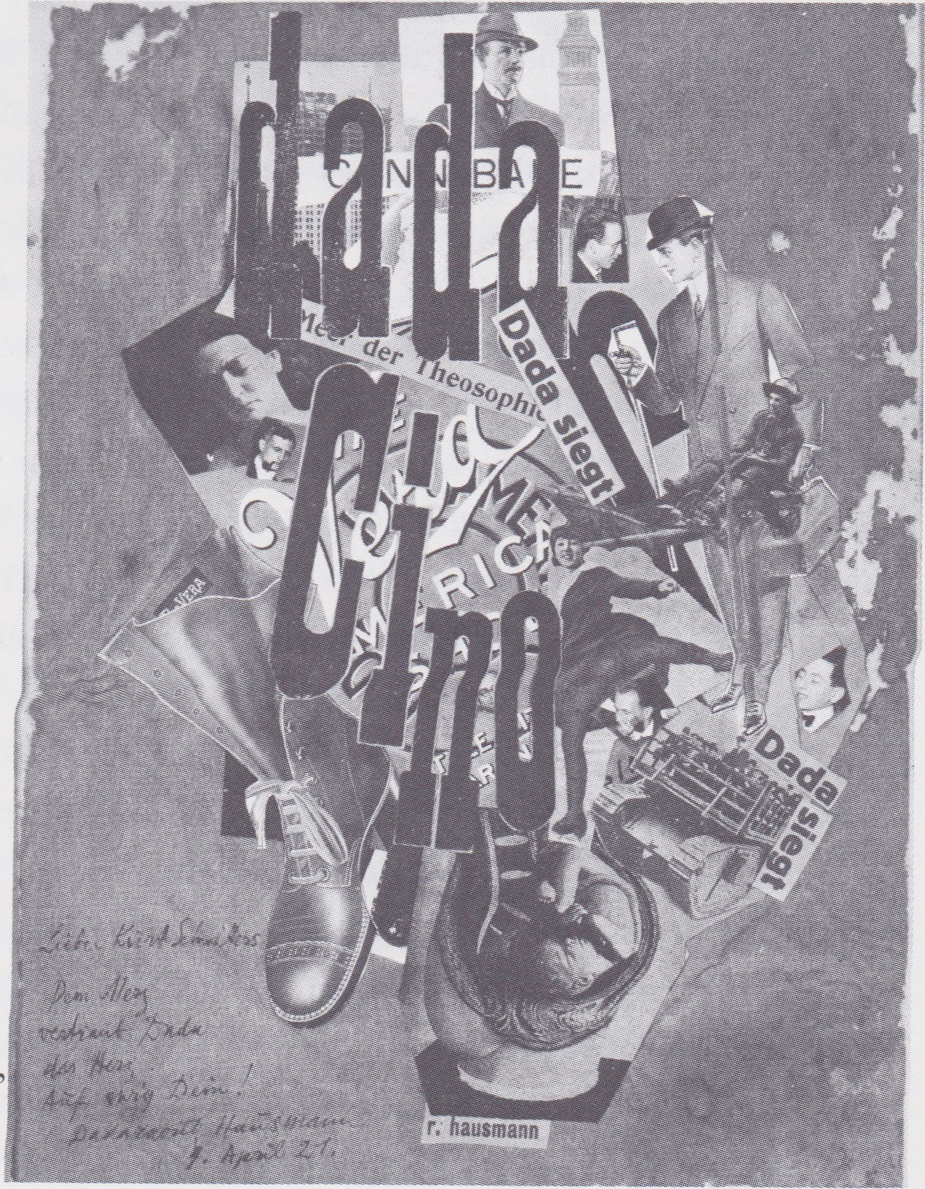
Raoul Hausmann: Dada Cino - 1920
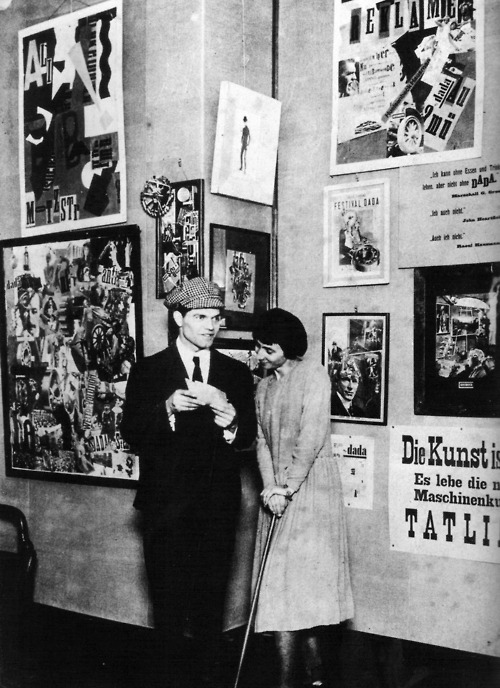
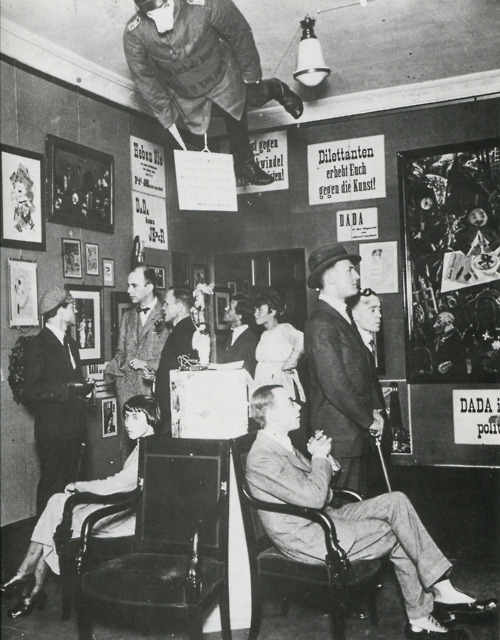
Raoul Hausmann et Hannah Höch au vernissage de la Foire internationale Dada, Berlin, galerie Otto Burchard, le 30 juin 1920.
Photo Robert Sennecke
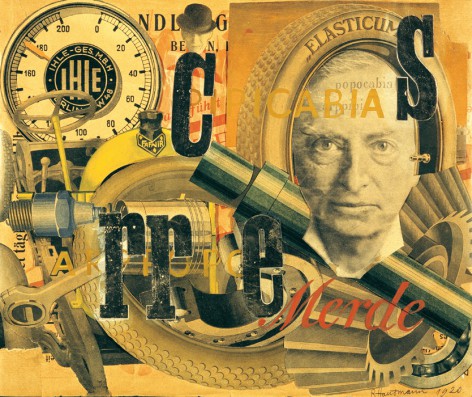
Raoul Hausmann: Elasticum, 1920, collage et gouache
En remerciant la Galerie Berinson, Berlin
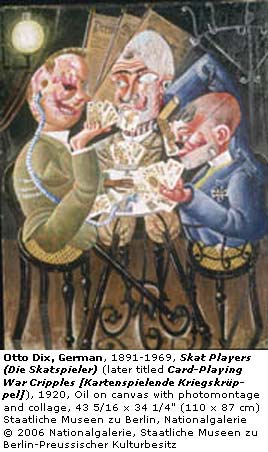
 Otto Dix 1891 - 1969
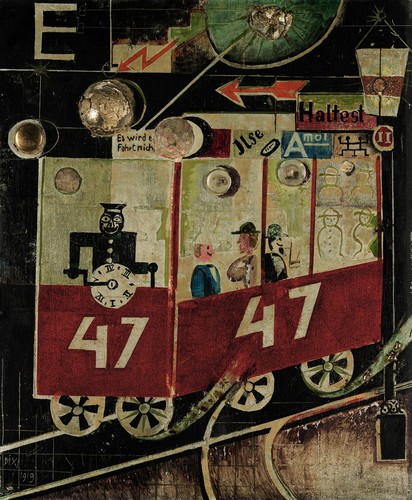
Otto Dix - Le Tramway électrique (1919)
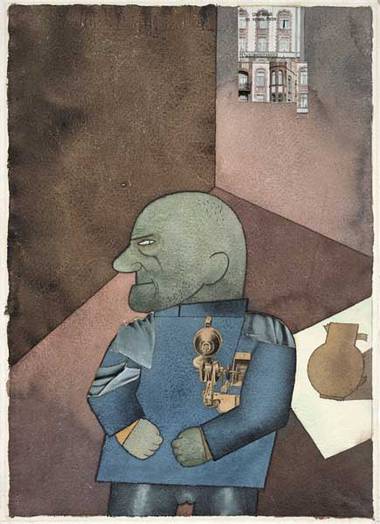
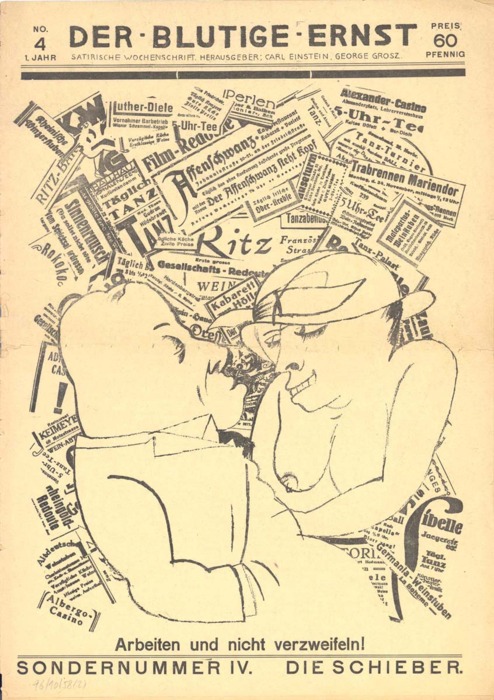
George Grosz 1893 - 1959
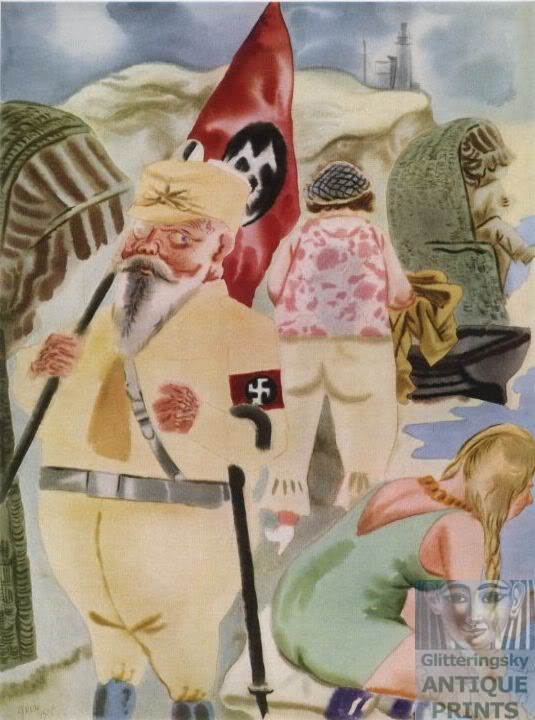
George Grosz : Man of Opinion
Hannah Höch 1889 - 1978
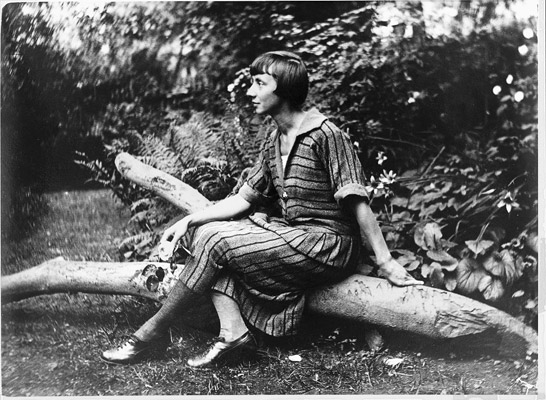
 Hannah Höch a été une des rares artistes féminines à participer au mouvement Dada. Comme imprimeur, peintre, collagiste, and photomontagiste, Höch a fait partie de la renaissance intellectuelle de Weimar ainsi que du cercle dadaïste berlinois. Ses oeuvres ont documenté l'agitation politique et sociale issue de la Première Guerre mondiale, ainsi que les problèmes associés à l'accès au vote des femmes, à leur indépendance financière et à leur libération sexuelle.
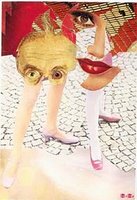
Anna Therese Johanne Höch was born in Gotha, Germany, in 1889. She studied graphic arts at the College of Arts and Crafts in Berlin from 1912 to 1914 until she was recruited to work for the Red Cross during the war. Höch also trained in fabric design and textiles after her time spent in the war, working part time for Ullstein Verlag, Weimar Berlin's largest publishing empire. She created lace tablecloths and needlepoint patterning and most notably had access to the company's catalogues which she used to create her early photomontages. In 1915, Höch met Raoul Hausmann and through him became associated with the Berlin Dadaists. Hausmann and Höch, under the influence of Dadaism, perfected the art of photomontage and used it as satirical propaganda. Höch became the only female to show works at the First International Dada Fair in 1920.
In 1922, Höch ended her relationship with Hausmann and left the Berlin Dadaists. Known for her independent spirit, masculine dress, and bisexual tendencies, Höch then had a relationship with Til Brugman, the Dutch writer and linguist from 1926 to 1929. She continued to produce her own art and champion female rights until the onset of World War II when the Nazi regime banned all artistic movements, claiming them to be "degenerate." Instead of fleeing Berlin, Höch chose inner exile so she could protect her precious artwork and Dada memorabilia. After the war, Höch quietly remained in Berlin and focused on smaller works. She died in 1978 at the age of eighty-nine. The Museum of Modern Art in New York held a retrospective of her work in 1997 to commemorate her contribution to Dada and women's art as a whole. NMWA's collection includes eighteen objects created by Höch.
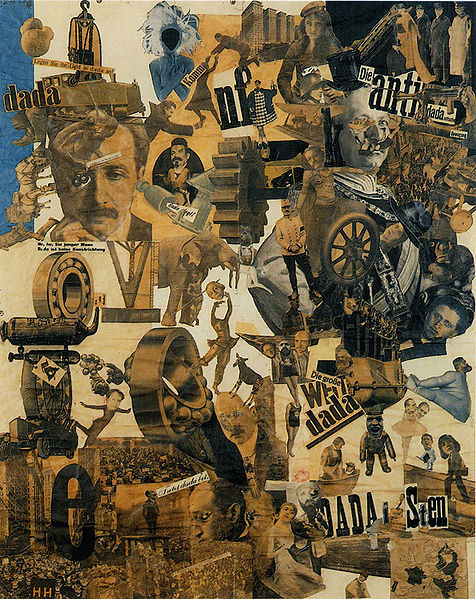
Hannah Höch - Cut with the Kitchen Knife
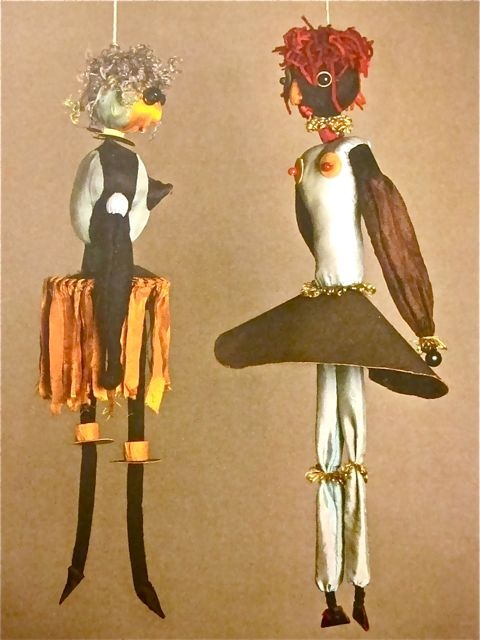
Hannah Höch: DaDa Dolls - 1916
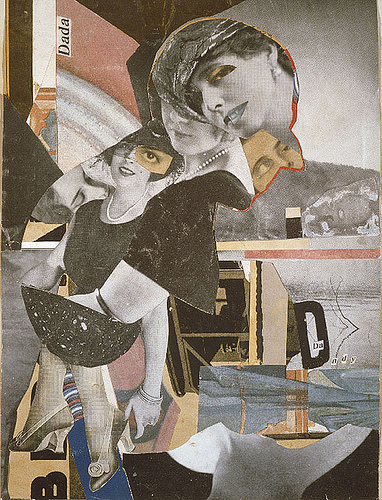
Hannah Höch - DaDandy - 1919
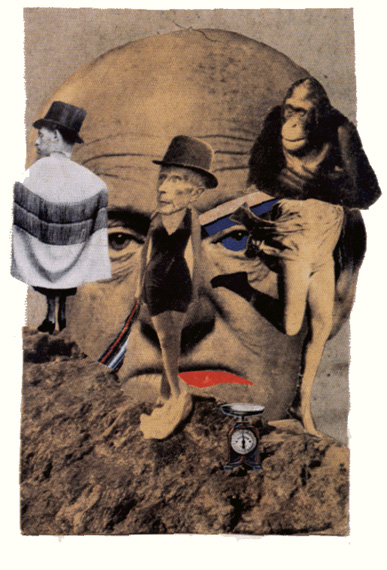
Hannah Höch - And When You Think the Moon is Setting - 1921
Richard Huelsenbeck 1892 - 1974
From the First German Dada Manifesto of 1918:
"Art in its execution and direction is dependent on the time in which it lives, and artists are creatures of their epoch. The highest art will be that which in its conscious content presents the thousandfold problems of the day, the art which has been visibly shattered by the explosions of last week... The best and most extraordinary artists will be those who every hour snatch the tatters of their bodies out of the frenzied cataract of life, who, with bleeding hands and hearts, hold fast to the intelligence of their time."
Poems by Richard Huelsenbeck in English translation by Johannes Beilharz:
http://www.jbeilharz.de/huelsenbeck/rh_poems.html
These poems were first published in the volume Phantastische Gebete (Fantastic Prayers) in 1916 (Collection Dada, Zurich), then reissued in 1920 in an expanded edition with illustrations by George Grosz by Malik Verlag, Berlin.
The translation is based on the text of the 1960 edition published by Arche Verlag, Zurich with a new dedication and preface by Richard Huelsenbeck.
 John Heartfield 1891 - 1968
John Heartfield, de son vrai nom Helmut Herzfzeld (1891-1968) a trouvé dans le photomontage un terrain privilégié qu'il a développé au cours des années vingt en concevant les couvertures de livres des Editions Malik (Der Malik Verlag), fondées par son frère Wieland. En 1918 les deux frères adhèrent au Parti communiste naissant (KPD), et au Club Dada de Berlin (il y est le "Dada-Monteur") en même temps que George Grosz En 1919, après avoir co-édité Jedermann sein eigner Fussball, mis à l'index après sa parution, Heartfield s'est joint à Wieland et à Grosz pour fonder Die Pleite, périodique satirique et politique. Heartfield compte parmi les organisateurs de la Première Foire Internationale Dada (Die erste Dada-Messe) aux côtés du Maréchal Grosz et du Dadasophe Raoul Hausmann.
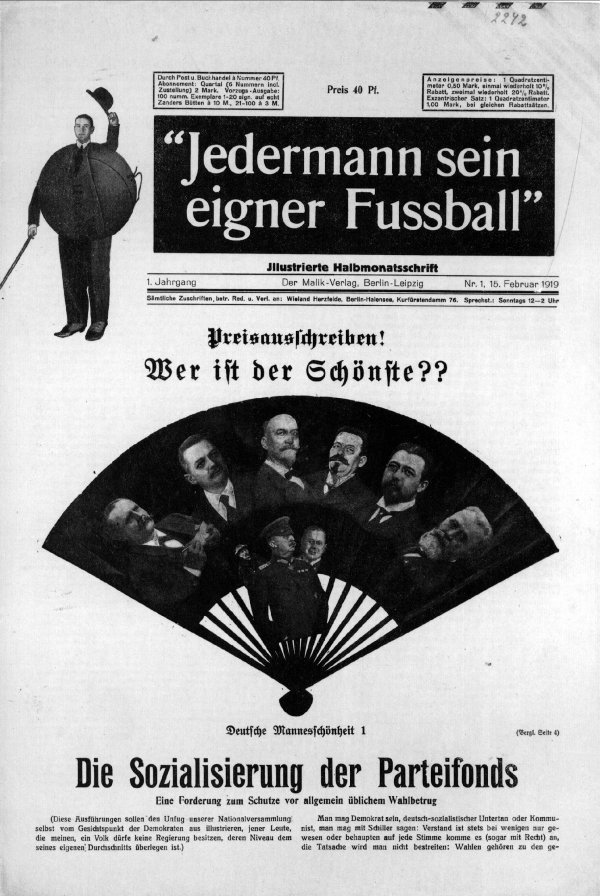
John Heartfield - Jedermann sein eigner Fussball - février 1919
Paul Citroen 1896 - 1983
Berlin 1896 -– Wassenaar 1983
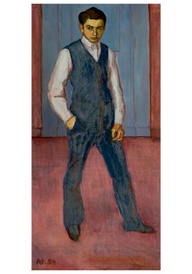
Paul Citroen - Autoportrait - 1914
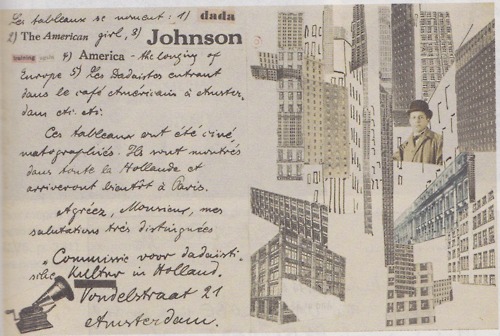
Paul Citroen - Lettre adressée à Francis Picabia, s.d. - Bibliothèque Doucet, Paris
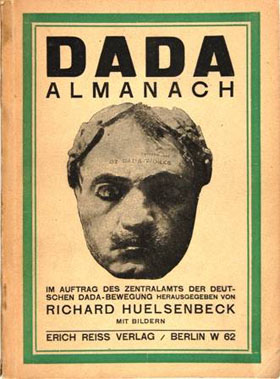
La formation et la première partie de la carrière de Paul Citroen se déroulent en Allemagne, où il entre en contact dès 1914 avec Herwarth Walden et la galerie Der Sturm. Il abandonne la peinture et devient libraire. Il se trouve aux Pays-Bas en 1917, où il s'occupe aussi de commerce d'art. De nouveau à Berlin en 1918, il est pris dans le mouvement Dada : Paul Citroen est notamment lié avec Erwin Blumenfeld et George Grosz. En 1920, il collabore à l'Almanach Dada de Richard Huelsenbeck. Il réalise à ce moment ses premiers photomontages, dont les plus célèbres sont La Ville et Metropolis : ces oeuvres sont constituées de fragments de photographies représentant des bâtiments disposés sur toute la surface de façon à donner une impression d'accumulation et de chaos. Il retourne à la peinture en 1922 et séjourne au Bauhaus de Weimar, où il étudie avec Johannes Itten. Il se trouve ensuite à Berlin, puis s'établit en 1927 aux Pays-Bas, où il continuera à peindre tout en ayant une activité de photographe. De 1935 à 1960, il a été professeur à l'Académie des beaux-arts de La Haye.
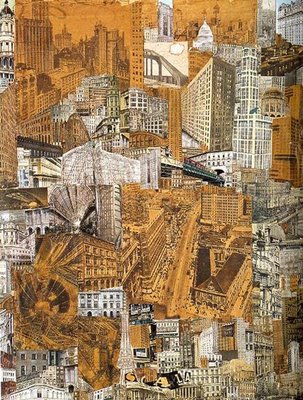
Paul Citroen - Metropolis - 1923
Il retourne à la peinture en 1922 et séjourne au Bauhaus de Weimar, où il étudie avec Johannes Itten. Il se trouve ensuite à Berlin, puis s'établit en 1927 aux Pays-Bas, où il continuera à peindre tout en ayant une activité de photographe. De 1935 à 1960, il a été professeur à l'Académie des beaux-arts de La Haye.
Cologne
Peu après la déclaration de guerre, pendant qu'Arp se réfugiait en Suisse, l'artilleur Max Ernst montait au combat avec les troupes allemandes. Démobilisé au début de 1919, il revint dans sa Westphalie natale où Arp devait le rejoindre quelques mois plus tard, fort de son expérience dadaïste zurichoise.
Dans l'intervalle Ernst avait fait la connaissance à Cologne d'Alfred Grünwald, fils d'un administrateur de sociétés, fondateur de la section rhénane du Parti Communiste et connu, sous le pseudonyme de Johannes Theodor Baargeld, comme peintre et poète.
Comme les Dadaïstes berlinois, les deux hommes furent amenés à prendre part au mouvement révolutionnaire de 1918-1919. Ils éditèrent un périodique communiste, Der Ventilator, dont on ne sait à peu près rien, sinon que certains numéros atteignirent un tirage de 20.000 exemplaires, qu'il était vendu à la criée dans les rues, aux portes des usines et des casernes et qu'il aurait finalement été interdit par les forces britanniques d'occupation en 1919. [...]
Grâce à la mise en commun des ressources intellectuelles d'Ernst, d'Arp et de Baargeld, Dada devait connaître à Cologne quelques-unes des plus heureuses réussites dans le domaine du collage. [...]
Mais de toutes les expériences tentées à Cologne, celle qui reste, historiquement, la plus importante fut la fusion de ces talents distincts en une série d'oeuvres anonymes facétieusement dénommées Fatagaga ("Fabrication de tableaux garantis gazométriques"). En créant ainsi une société de production de collages collectifs exécutés avec ou sans entente préalable, les trois hommes inauguraient une technique que les Surréalistes allaient développer avec fruit ("Cadavre exquis"). Cette société fut appelée Centrale W/3 "W fûr Weststupidien, 3 für die 3 Verschworenen : Hans Arp, J.T. Baargeld und M.[ax] E.[rnst]" et se donna pour organe la revue Dada W/3, elle aussi morte en enfance.