Marcel Duchamp 1887-1968
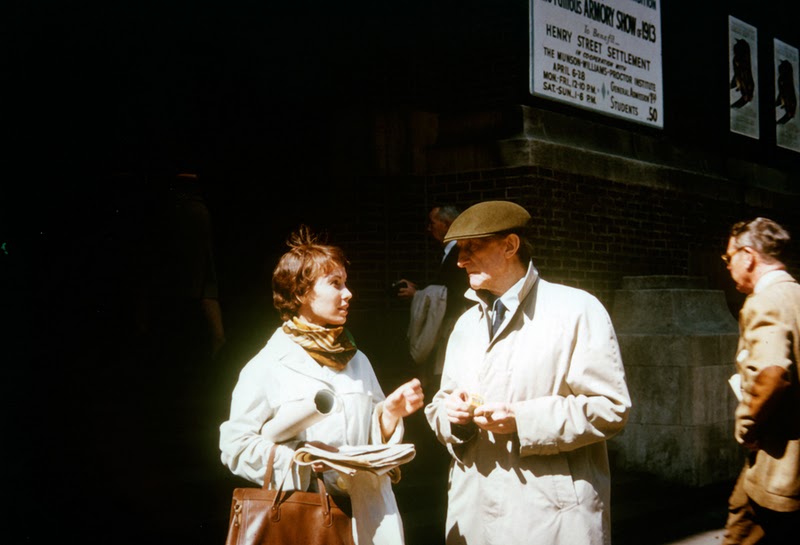
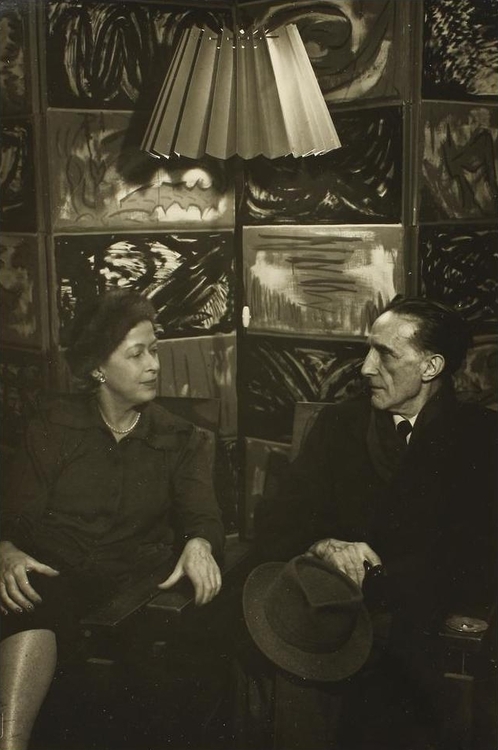
Anne Sanouillet and Marcel Duchamp, New York, 1963
Perhaps no one was less dogmatically dadaist, yet more spiritually dada, than Marcel Duchamp. While the dada-surrealist explosion was for many the catalytic agent of a discovery -- for example, for the prime movers of the review Littérature -- and was for so many others a break which gave them a literary life rather cheaply, it is evident that, through dada and surrealism, Duchamp has remained himself. His interior evolution, begun even before cubism, bears the mark of no known influence. In Duchamp are joined the essential elements of the dada revolt: a total absence of principles or prejudices, things moveover being equal and permitted. "There is no solution," says Duchamp, "because there isn't any problem." This sense of "umor" is dada, as well as the affection for puns and spoonerisms which are so perfectly suited to transcending the comic. "My irony," says Duchamp, "is that of indifference: meta-irony."
Michel Sanouillet, The Writings of Marcel Duchamp, 1989
In order to view a large number of videos and slideshows on Duchamp, see Dada Movies.
Before Marcel Duchamp, a work of art was an artefact, a physical object. After Duchamp it was an idea, a concept. Duchamp did to art what Einstein did to physics and Darwin to religion: each destroyed the foundations of a subject – although they did so in very different ways. Einstein thought long and hard until he formulated his new vision of the physical world. Darwin agonised for decades, making himself physically ill, before announcing that we were merely members of the animal kingdom. In stark contrast, Duchamp approached the demolition of the art establishment and the pretentiousness of artists with the cold-eyed calculation of a saboteur looking for the best target. He found his target in New York in 1917.
Early life
Henri Robert Marcel Duchamp was born in Blainville-Crevon in the Seine-Maritime province of upper Normandy on 28th July 1887. His mother Lucie (née Nicolle) was the daughter of a painter and engraver, and his father Eugene a local notary. The art of his maternal grandfather filled their house, and the young Marcel and his three surviving siblings absorbed artistic sensibilities from infancy. All four children took up art. Marcel became a painter; one elder brother Jacques a painter and printmaker; his other older brother Raymond became a very distinguished sculptor; and their young sister Suzanne another painter.
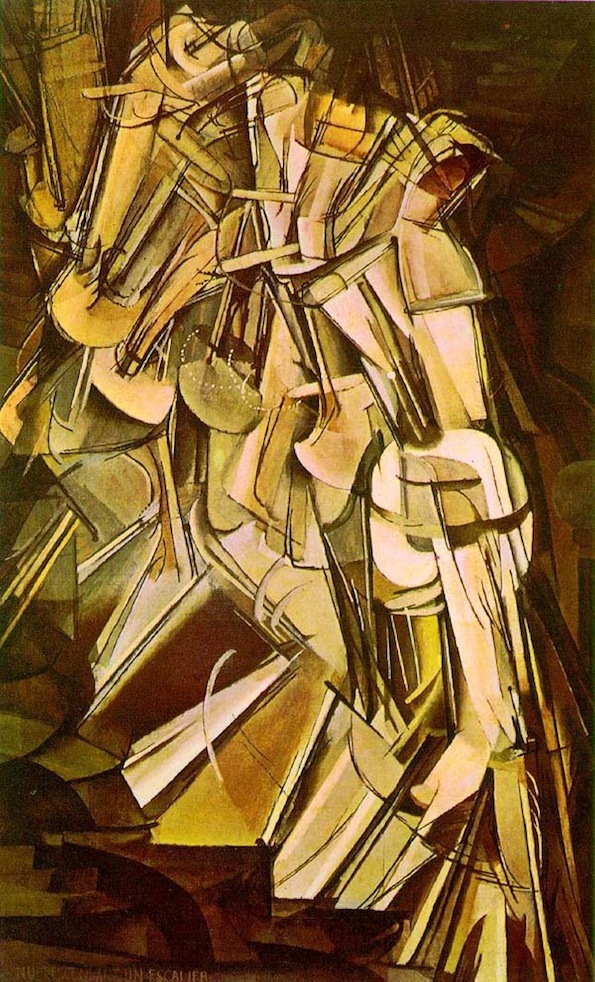
After winning a prestigious prize for drawing at school, Marcel decided to follow his elder brothers and study at the Académie Julian. Helped by the patronage of Jacques, who had become a member of the Académie Royale, he exhibited in the 1908 Salon d'Automne, becoming a lifelong friend of the artist Francis Picabia and the critic Guillaume Apollinaire. Duchamp's brief career as a pure painter culminated with his masterpiece Nude Descending a Staircase (now in the Philadelphia Museum of Art), which was submitted to the Cubist Salon des Indépendents in 1912. The organisers of that exhibition asked his elder brothers to persuade him to withdraw the painting or to paint over its title. He promptly went to the showroom in a taxi and removed it from the exhibition. This was a turning point in his life, which he thereafter largely devoted to seeking an answer to two questions: What is to be deemed acceptable as art? and Who decides?
After gaining exemption from military service, Duchamp felt increasingly uncomfortable in France, and in 1915 decided to emigrate to the United States. Several of his paintings had been purchased there, so he could afford to move. On arriving he found he was a celebrity there, and he made it his home, eventually taking citizenship in 1955.
Fountain
Duchamp had two strategic objectives. First, to destroy the hegemony exerted by an establishment which claimed the right to decide what was, and what was not, to be deemed a work of art. Second, to puncture the pretentious claims of those who called themselves artists and in doing so assumed that they possessed extraordinary skills and unique gifts of discrimination and taste. Tactically he sought to make a very bold, and very public, gesture, by seeking to submit some totally outrageous entry under conditions the art establishment would be forced either to accept under their own rules, or to break these rules, giving reasons for rejection. He saw the perfect opportunity in an exhibition planned by the Society of Independent Artists in New York in April 1917. He was a member of the committee, whose rules explicitly stated that all works submitted would be exhibited. This aimed to be the biggest event of its kind, having 2,500 works submitted by1,500 artists, and so would attract the kind of attention Duchamp sought.
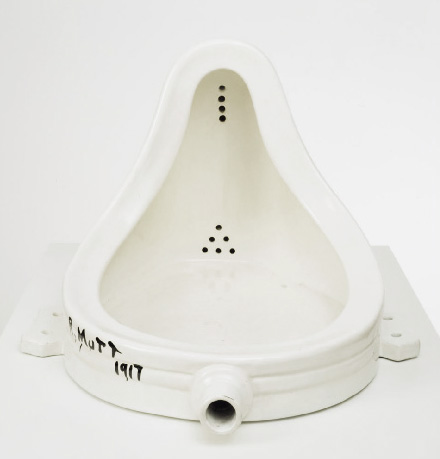
On 17 April, 1917 he discovered an ideal exhibit when strolling along Fifth Avenue in the company of Walter Arensberg, his patron, a collector, and Joseph Stella, a fellow artist. When they passed the retail outlet of J.L. Mott (now alas no longer there), Duchamp was fascinated by a display of sanitary ware. He had found what he had been diligently seeking; and persuaded Arensberg to purchase a standard, flat-backed white porcelain urinal. Taking it to his studio, he placed it on its back, signed it with the pseudonym "R.Mutt", and gave it the name Fountain. It is the only submission to the exhibition which is now remembered, since after having been on display for a short while, the organising committee, suitably outraged, rejected it.
However, his shrewd two-way bet had succeeded beyond Duchamp's wildest expectations, and he achieved the notoriety he was after, and subsequently seismically shifted the thinking of the art world. In 2004, a panel of artists and art historians voted Fountain as the most influential artwork of the Twentieth Century. Duchamp’s place in the history of Art was commemorated in 2000 by the founding of the Prix Marcel Duchamp – an annual award given to young artists by the Centre Georges Pompidou in Paris. That a tribute to his work should be associated with a building which its architect turned inside out would have greatly appealed to Duchamp.
The original Fountain has disappeared, although a photograph exists, and seventeen copies exist in various art galleries.
The Philosophical Aftermath
Over the centuries, hundreds of artists have produced thousands of accepted masterpieces which adorn museums and galleries worldwide. Until the early Twentieth Century it had seemed fairly clear what these works had in common: they were all physical artefacts such as paintings, sculptures, engravings, and etchings, which showed exemplary craftsmanship and were representations considered beautiful, interesting or inspiring. Today it seems that anything goes in art galleries: animal carcasses; unmade beds; comic book paintings; huge statues of Disney characters; rows of bricks; live performances; created landscapes – whatever. It would be totally unreasonable to claim that such a dramatic change could be laid at the feet of one man. It would equally unreasonable to ignore the impact made by Duchamp. It also seems ill-advised to claim, as the philosopher Arthur Danto once did, that this change means that art is now dead. On the contrary, art seems to be flourishing as never before.
What has happened is that there has been a progressive demolition of practically all the conditions which had been regarded as mandatory for something to be considered a work of art. Art no longer has to represent anything, nor even to be beautiful (although of course it can be), nor require exemplary skill for its production (although that might be so, too). Neither does it have to be made by the putative artist, who can simply put forward an idea for somebody else to make or perform. Why one should then be regarded as an artist, and the other not, is an interesting philosophical question in itself. Another question – very pressing if you've just spent a fortune on a Picasso – is, if it were possible to make exact physical copies (as soon may be the case using high-fidelity 3D printing), why should only the original be a work of art?
It cannot be the case that absolutely anything can be a work of art, since then everything would be a work of art. The real problem – and this is Duchamp’s great legacy to philosophy – is that we now need to work out a sufficient set of conditions for art. Several philosophers rose and are rising to this challenge. Nelson Goodman sought to treat all manifestations of art – painting, sculpture, music, literature, performance and dance – in terms of a general theory of symbols – thus examining the languages of art. As mentioned, Arthur Danto set out to establish that art was dead; then changed his mind, explaining why this in fact is not the case. What does certainly seem to be dead are old fashioned philosophies of aesthetics.
Although an accomplished and versatile artist, Duchamp's contribution to philosophy has proved greater than his contribution to art. Art requires our left brains and our right brains to talk to each other, and so give meaning to experiences which lie beyond the grasp of reason. Exactly how this works and what its limits are (if any) poses philosophical problems of great relevance, importance and difficulty, whose solutions would bring a greater breadth and balance to our cultural life.
Last Words
During the 1920s and 30s, Duchamp became a chess master and an authority on the game. For the rest of his life this passion excluded most other activities. When his wife left him, finally unable to cope with his obsessive personality, she made an appropriately powerful gesture, glueing his favourite pieces to his favourite board. Duchamp must have felt that at least this showed a sound grasp of one sufficient condition for the production of a work of art: she had made a telling statement without using words.
Marcel Duchamp died on 2nd October 1968 in Neuilly-sur-Seine, and was buried in Rouen Cemetery. On his tombstone he had arranged for an engraving: "D'ailleurs, c'est toujours les autres qui meurent" ("Anyway, it's always the others who die"). In so doing he had, most fittingly, made his memorial both a philosophical statement and a work of art.
© Sir Alistair MacFarlane 2015
Sir Alistair MacFarlane is a former Vice-President of the Royal Society and a retired university Vice-Chancellor.
Philosophy Now - June-July 2015
In 1917, Marcel Duchamp, a French émigré residing in America, submitted an upside-down toilet for an art show held by the Society of Independent Artists in New York. He signed this piece 'R. Mutt' and placed it behind a transparent screen. His objective was to challenge previous notions of what constitutes art. This piece, in 2004, was voted the most influential modern artwork of all time by a panel of 500 experts.
At first, some critics understandably thought Duchamp's toilet was a practical joke. Indeed, some people still struggle to take it seriously. Yet this iconoclastic piece was submitted as a challenge to the art world and has influenced artists ever since. Without Duchamp's Fountain - Fountain being its legitimate name, although I prefer to call it 'toilet' - one couldn't imagine what a modern art exhibition would look like.
There is no doubt that a stroll through a modern art exhibition can be a dizzying experience. One's eye sockets will no doubt ache due to the constant eye rolls that these exhibitions seem to provoke. Furthermore, one will probably have to toil through a whole lot of pretentious bullshit before one arrives at anything of artistic merit. Modern art is shock-provoking, ostentatious and in many ways, just plain old mad. I suppose this madness is what certain people find so irritating - or, in my case, so enjoyable - about the modern art world.
What is it that I find so enjoyable about modern art? Well, if you go to London's national gallery and view the artworks of Turner or Constable, you might marvel at the draughtsmanship of the artist and the aesthetic appeal of the work. And this can be, and often is, a wholly pleasurable experience. However, this kind of art museum, with its array of often all-too-familiar works, can also be, dare I say, boring.
A modern art museum, on the other hand, with all its enigmatic conceptual art and it's seemingly pointless everyday-objects-turned-sculptures, can be a frightening and flummoxing experience, but never really boring. People seem to despise the lack of sense that is so apparent in modern and contemporary art but, for me, that lack of sense is the most exciting part. I love walking into a room with a looping video of a girl picking her nose and then shouting 'hate' at the top of her lungs. I enjoy looking at a pile of boxes and trying, and failing, to work out what exactly this work represents. I adore the crazed, maniacal performance artists dancing on top of marmalade while simultaneously whipping themselves while a discombobulated crowd looks on. The madness intrigues me.
Duchamp and his little cabal of antagonistic dadas wanted art to be a purely intellectual tool. Well, plenty of modern art, and certainly contemporary art, asks the audience to seek meaning from ostensibly nonsensical pieces and, for me, this is exciting and very rarely boring. And isn't it wonderfully appropriate that all the ostensible madness of modern and contemporary art can be traced back to an industrially manufactured object that men would usually urinate in - turned upside down, of course.
Ioan Marc Jones in The Huffington Post - March 29, 2015
Of the twentieth-century art gods (Pablo Picasso, Henri Matisse, Marcel Duchamp, Jackson Pollock and Andy Warhol), Marcel Duchamp elicits no middle road. He is either revered as a godlike figure of contemporary art or disdained as a charlatan. Curators, artists, critics and dealers praise his import in reframing and redefining what is art and how we view it. In fact, the other night at a dinner party seated amongst a crowd of the aforementioned art-world folk, I asked, "Are we done with Duchamp?" Knives and forks dropped from their fingers as their eyes shot daggers at me. The rebuttal that followed began, " We can never be done with Duchamp!" and "If you know anything about contemporary art, how can you propose such a question?"
Indeed, I swear, on a stack of Artforums, I am no art historian or art scholar, nor a curator, critic or dealer. I am simply and purely an art appreciator. And, I realize by proposing that I see an overuse of art proclaiming a Duchampian lineage or ideal that I am certain to provoke strong opinions from people smarter than I. What has this idealism done for art? The ideal form, the ideal material, the ideal expression, the ideal truth; these things continue to be sought, but alas, they have all been found!
They have all been found in everyday materials (which seems to be the popular medium used in contemporary art), such as trash, used clothing, packaging supplies, broken furniture and other multitudes of mundane objects thrown together is cast out in the galleries as "Duchampian." Marcel Duchamp influenced contemporary artists perhaps more than any other master from the twentieth century. He paved the way for pop art, environmental art, assemblage, installation art and conceptual art. Even so, Duchamp is overdone in contemporary art. Art historian and critic Barbara Rose, in her well-written article for The Brooklyn Rail reviewing the recent exhibition of Duchamp's paintings at Centre Pompidou, commented in her post script: "What Duchamp himself had done was always interesting and provocative. What was done in his name, on the other hand, was responsible for some of the silliest, most inane, most vulgar non-art still being produced by ignorant and lazy artists whose thinking stops with the idea of putting a found object in a museum." Bravo! I completely agree. This is what I am asserting when I ask, are we done with Duchamp? The products that call themselves works of art copying ideas and images put forth previously are far too numerous, too sporadic and have been done again and again. Duchamp, by contrast, was compelled or obsessed to not fall into complacency or predictability; he challenged himself to not repeat and reuse the same thing. He disliked reproduction and secondhand experience.
From his failures, rebellion or both, Duchamp emerged successful. He failed at art school, in printmaking and with painting. Yet, he was not deterred. He could have changed course, pursuing a life as a chess-playing librarian, but he didn't. He continued to question, "What is art?" and "How do we see art?" In both life and art, he looked beyond what had already been done, rejected conventional conformity and avoided an affiliation with any group -- thus, not claiming to be a cubist, dadaist, modernist, surrealist, of futurist, yet associating with all. He felt it unnecessary to encumber his life with attachments and stated that he chose to live with or without "too much weight, with a wife [although, he was twice married], children, a country house, an automobile." He was a champion of independent thinking. An evasive, private, elusive man and often known as a poker-faced trickster, he was a controversial figure with contradictions. [...]
Katherine Meadowcroft in Huffpost Arts & Culture - March 10, 2015
Marcel Duchamp: a riotous A-Z of his secret life
The iconic artist had a mortal dread of hair, posed as a cheese merchant to outfox the Nazis – and made artworks out of sperm. Here's a dictionary of Duchamp by Thomas Girst
(see Recent Books on Dada)
Artist
'I don't believe in art. I believe in the artist.'
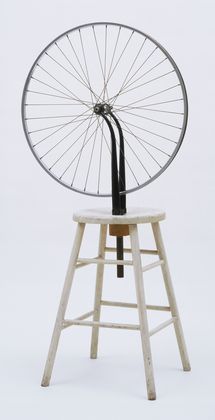
Bicycle wheel
The original Bicycle Wheel readymade from 1913, and a second version, were lost. The third has a curious story. In 1995, a man walked into New York's MoMA and stole the third version from the gallery. The thief left the building unnoticed, then returned the artwork the next day by throwing it over the wall of the sculpture garden.
Breasts
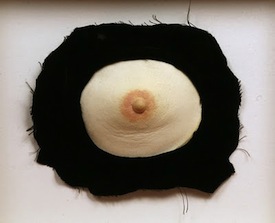
Duchamp used 1,000 foam-rubber breasts for the catalogue covers of the Paris exhibition Le Surréalisme in 1947. The back covers read 'Prière de toucher', or 'Please touch'.
Cheese
During the second world war, Duchamp devised a scheme to transport his artistic materials out of Europe. On the way to the US, he passed through Nazi checkpoints in Paris posing as a cheese merchant. Luckily, he did not arouse suspicion.
Chess
The game occupied him so much that, out of jealousy, his first wife, Lydie Fischer Sarazin-Levassor, glued his chess pieces to the board. The marriage lasted seven months. [...]
MARCEL DUCHAMP - Journal Entries by Marvin Lazarus, 1959 - 1960
Making Mischief: Dada Invades New York at the Whitney through February 23, 1996
by John Perrault
Old but good.
Putting modern art on the map
Will Gompertz
The story of modern art is in many ways the story of the 20th century. Art shaped and was shaped by events, people, ideas and innovations far beyond the narrow confines of its world. The modern skyscrapers of Manhattan, TS Eliot, Monty Python, the Sex Pistols, the iPhone and the great political, philosophical and social movements of the last hundred years all owe something to the art produced by Manet, Monet and those pioneering artists who followed in their wake. [...]
But there is perhaps one person above all others whose influence and personality dominate 21st-century artistic activity and critical thinking – an individual who was able to impose his will on the world without recourse to courting the media, becoming a celebrity, or having vast amounts of money. It is an incredible story within a story that starts on 2 April 1917; on this day, the American president, Woodrow Wilson, was on his feet in Washington DC urging Congress to make a formal declaration of war on Germany – a historic and world-changing moment.
Meanwhile, in New York City, three well-dressed, youngish men had emerged from a smart duplex apartment at 33 West 67th Street and were heading out into the city. They were oblivious to Wilson's exhortations, just as they were to the fact that their afternoon stroll would also have epoch-making consequences on a global scale. Art was about to change for ever.
The three friends walked and talked and smiled, occasionally breaking into restrained laughter. For the elegant Frenchman in the middle, flanked by his two stockier American companions, such excursions were always welcome. He was an artist who had not yet lived in the city for two years: long enough to know his way around, too short a time to have become blasé about its exciting, sensuous charms. The thrill of walking southwards through Central Park and down towards Columbus Circle never failed to lift his spirits; the spectacular sight of trees morphing into buildings was, to him, one of the wonders of the world.
The trio ambled down Broadway. As they approached midtown the sun disappeared behind impenetrable blocks of concrete and glass, bringing a spring chill to the air. The two Americans talked across their friend, whose hair was swept back exposing a high forehead and well-defined hairline. As they talked he thought. As they walked he stopped. He looked into the window of a store selling household goods and raised his hands, cupping his eyes to eliminate the reflection in the glass, revealing long fingers each of which was crowned with a perfectly manicured nail.
The pause was brief. He moved away from the storefront and looked up. His friends had gone. He glanced around, shrugged, lit a cigarette and crossed the road – not to find his companions, but to seek the sun's warmth. It was now 4.50pm, and a wave of anxiety washed over the Frenchman. Soon the stores would be closed and there was something he desperately needed to buy.
He walked a little faster. Someone shouted his name. He looked up. It was Walter Arensberg, the shorter of his two friends, who had supported the Frenchman's artistic endeavours in America almost from the moment he stepped off the boat on a windy June morning in 1915. Arensberg was beckoning him to cross back over the road, past Madison Square and on to Fifth Avenue. But the notary's son from Normandy had tilted his head upwards, his attention focused on an enormous concrete wedge. The Flatiron Building had captivated the French artist long before he arrived in New York, an early calling card from a city that he would go on to make his home.
His initial encounter with the high-rise building had come when it was first built and he was still living in Paris. He had seen a photograph of the 22-floor skyscraper taken by Alfred Stieglitz in 1903 and reproduced in a French magazine. Now, 14 years later, both the Flatiron and Stieglitz, an American photographer-cum-gallery owner, had become part of his new-world life.
Arensberg called again, this time with a little frustration in his voice. The other man in their party laughed. Joseph Stella was an artist too. He understood his Gallic friend's precise yet wayward mind and appreciated his helplessness when confronted by an object of interest.
United again, the three made their way south until they reached 118 Fifth Avenue, the retail premises of JL Mott Iron Works, a plumbing specialist. Inside, Arensberg and Stella chatted, while their friend ferreted around among the bathrooms and doorhandles that were on display. After a few minutes he called the store assistant over and pointed to an unexceptional, flat-backed, white porcelain urinal. A Bedfordshire, the young lad said. The Frenchman nodded, Stella raised an eyebrow, and Arensberg, with an exuberant slap on the assistant's back, said he'd buy it.
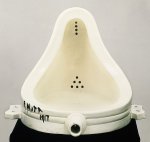
Fountain / Fontaine (1917 - 1964) In 2004, this urinal was voted the single most influential piece of art in the 20th century.
They left the store. Arensberg and Stella called a taxi while the quiet, philosophical Frenchman remained on the sidewalk holding the heavy urinal. He was amused by the plan he had hatched for this porcelain pissotière, which he intended to use as a prank to upset the stuffy American art crowd. Looking down at its shiny white surface, Marcel Duchamp (1887-1968) smiled to himself: he thought it might cause a bit of a stir.
Duchamp took the urinal back to his studio, laid it down on its back and rotated it 180 degrees. He then signed and dated it in black paint on the left-hand side of its outer rim, using the pseudonym R Mutt 1917. His work was nearly done. There was only one job remaining: he needed to give his urinal a name. He chose Fountain. What had been, just a few hours before, a nondescript, ubiquitous urinal was now, by dint of Duchamp's actions, a work of art.
At least it was in Duchamp's mind. He believed he had invented a new form of sculpture: one where an artist could select any pre-existing mass-produced object with no obvious aesthetic merit, and by freeing it from its functional purpose – in other words making it useless – and by giving it a name and changing its context, turn it into a de facto artwork. He called this new form of art a readymade: a sculpture that was already made.
His intention was to enter Fountain into the 1917 Independents Exhibition, the largest show of modern art that had ever been mounted in the US. The exhibition itself was a challenge to America's art establishment. It was organised by the Society of Independent Artists, a group of free-thinking, forward-looking intellectuals who were making a stand against what they perceived to be the National Academy of Design's conservative and stifling attitude to modern art (just as the impressionists had done in a very similar fashion over 40 years earlier).
They declared that any artist could become a member of their society for the price of $1, and that any member could enter up to two works into the 1917 Independents Exhibition as long as they paid an additional charge of $5 per artwork. Duchamp was a director of the society and a member of the exhibition's organising committee. Which, at least in part, explains why he chose a pseudonym for his mischievous entry. Then again, it was Duchamp's nature to play on words, make jokes and poke fun at the pompous art world.
The name Mutt is a play on Mott, the store from which he bought the urinal. It is also said to be a reference to the daily comic strip Mutt and Jeff, which had first been published in the San Francisco Chronicle in 1907 with just a single character, A Mutt. Mutt was entirely motivated by greed, a dim-witted spiv with a compulsion to gamble and develop ill-conceived get-rich-quick schemes. Jeff, his gullible sidekick, was an inmate of a mental asylum. Given that Duchamp probably intended Fountain to be a critique of greedy, speculative collectors, it is an interpretation that would appear plausible. As does the suggestion that the initial R stands for Richard, a French colloquialism for moneybags. With Duchamp nothing was ever simple; he was, after all, a man who preferred chess to art.
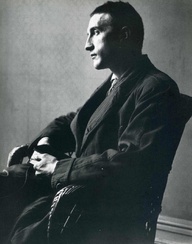
Marcel Duchamp by Man Ray
Duchamp had other targets in mind when selecting a urinal as a readymade sculpture. He wanted to question the very notion of what constituted a work of art as decreed by academics and critics, whom he saw as the self-elected and largely unqualified arbiters of taste. His position was that if an artist said something was a work of art, having influenced its context and meaning, then it was a work of art, or at least demanded to be judged as such. He realised that although this was a fairly simple proposition to grasp, it would revolutionise art if accepted.
Until this point, the medium – canvas, marble, wood or stone – had dictated to an artist how he or she could go about making a work of art. The medium always came first, and only then would the artist be allowed to project his or her ideas on to it via painting, sculpting or drawing. Duchamp wanted to flip the hierarchy. He considered the medium to be secondary: first and foremost was the idea. Art could be constructed from, and mediated through, anything. That was a big idea.
The hidden meanings contained within Fountain don't end in Duchamp's wordplay and provocation. He specifically chose a urinal because as an object it has plenty to say, much of it erotic, an aspect of life that Duchamp frequently explored in his work. It doesn't, for example, take much imagination to see its sexual connotations when presented upside down. That allusion may or may not have been understood by those who sat alongside Duchamp on the organising committee; either way his co-directors were unimpressed. Fountain was rejected and banned from the 1917 Independents Exhibition. The feeling among the majority of the society's directorate (there were some, including Arensberg and Duchamp, who argued passionately in its favour) was that Mr Mutt was taking the piss.
Which of course he was. Duchamp was challenging his fellow society directors and the organisation's constitution, which he had helped to write. He was daring them to realise the idea that they had collectively set out, which was to take on the art establishment and the authoritarian voice of the conservative National Academy of Design with a new liberal, progressive set of principles. The conservatives won the battle, but as we now know, spectacularly lost the war. R Mutt's exhibit was deemed too offensive and vulgar on the grounds that it was a urinal, a subject that was not considered a suitable topic for discussion among America's puritan middle classes. Team Duchamp immediately resigned from the board. Fountain was never seen in public, or ever again. Nobody knows what happened to the Frenchman's pseudonymous work. It has been suggested that it was smashed by one of the disgusted committee, thus solving the problem of whether to show it or not. Then again, a couple of days later, at his 291 gallery, Stieglitz took a photograph of the notorious object, but that might have been a hastily remade version of the readymade. That too has disappeared.
But the great power of ideas is that you cannot uninvent them. The Stieglitz photograph was crucial. Having Fountain photographed by one of the art world's most respected practitioners, who also happened to run an influential gallery in Manhattan, was important. It was an endorsement of the work by the avant garde, and provided a photographic record: documentary proof of the object's existence. No matter how many times the naysayers smashed Duchamp's work, he could go back down to JL Mott's, buy a new one and simply copy the layout of the R Mutt signature from Stieglitz's image. And that's exactly what happened. There are 15 Duchamp-endorsed copies of Fountain to be found in collections around the world.
When one of those copies is put on display it is weird to see people taking it so seriously. You see hordes of earnest exhibition visitors craning their heads around the object, staring at it for ages, standing back, looking at it from all angles. It's a urinal! It's not even the original. The art is in the idea, not the object.
The reverence with which Fountain is now treated would have amused Duchamp, who chose it specifically for its lack of aesthetic appeal (something he called anti-retinal). The original readymade sculpture was really only ever intended as a provocative prank, but has gone on to become perhaps the single most influential artwork of the 20th century. The ideas it embodied directly influenced several major art movements, including dada, surrealism, abstract expressionism, pop art and conceptualism. Duchamp is unquestionably the most revered and referenced artist among today's contemporary artists, from Jeff Koons to Ai Weiwei. [...]
guardian.co.uk, Friday 24 August 2012 21.35 BST
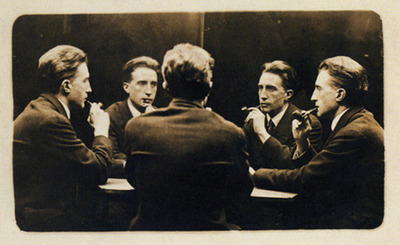
Marcel Duchamp - 1917
Dada was an extreme protest against the physical side of painting. It was a metaphysical attitude. It was intimately and consciously involved with 'literature.' It was a sort of nihilism to which I am still very sympathetic. It was a way to get out of a state of mind--to avoid being influenced by one's immediate environment, or by the past: to get away from cliches—to get free. The 'blank' force of dada was very salutary. It told you 'don't forget you are not quite so "blank" as you think you are.' Usually a painter confesses he has his landmarks. He goes from landmark to landmark. Actually he is a slave to landmarks—even to contemporary ones.
Dada was very serviceable as a purgative. And I think I was thoroughly conscious of this at the time and of a desire to effect a purgation in myself. I recall certain conversations with Picabia along these lines. He had more intelligence than most of our contemporaries. The rest were either for or against Cézanne. There was no thought of anything beyond the physical side of painting. No notion of freedom was taught.
Marcel Duchamp, in The Museum of Modern Art Bulletin, New York: The Museum of Modern Art, 1946.
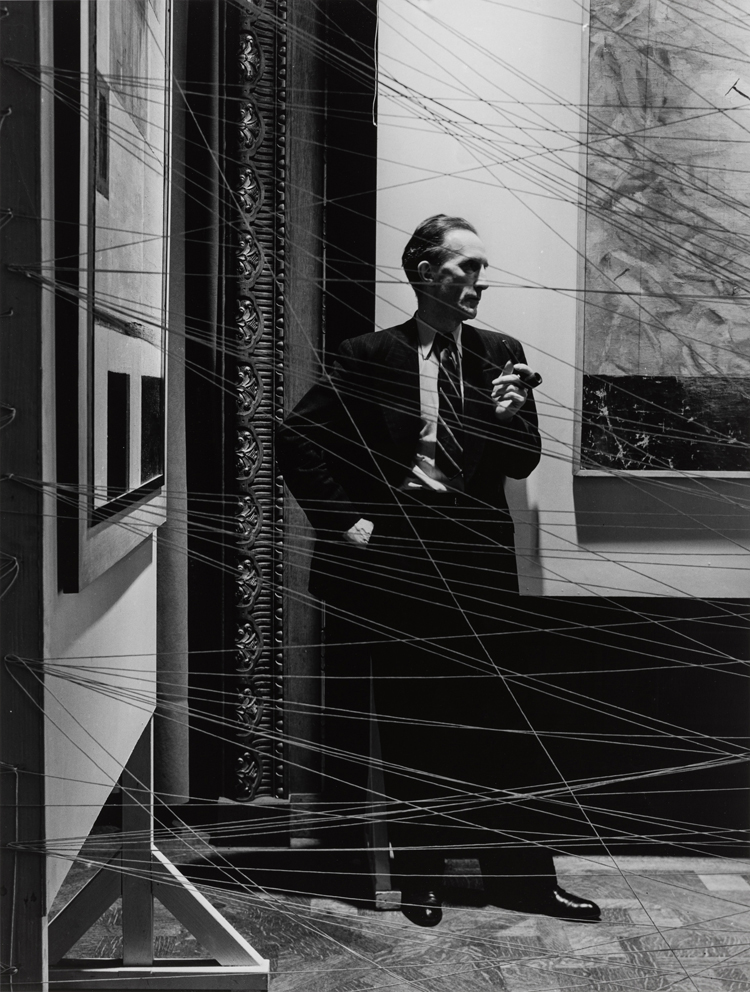
Marcel Duchamp in 1942 by Arnold Newman
With Duchamp, the clues are in the string and shadows that envelop the artist in Newman's 1942 photo. Taken at a landmark art exhibit called "First Papers of Surrealism", the image puts Duchamp behind the layers of twine that Duchamp had strung throughout the show at a large Manhattan mansion. Dressed in suit and tie, hand in his pocket, Duchamp is looking away, with shadows covering his cheek and even his eyes. We see Duchamp but can't see him.
Newman, who meticulously researched his subjects, knew that Duchamp opposed art that appealed only to the visual senses. Duchamp disliked painting for painting's sake. Duchamp's famous "readymades" — like the urinal he exhibited in 1917 — were meant to detach artgoers' reliance on an object's looks, and to stoke internal reactions. Newman, who studied painting on scholarship at the University of Miami, understood Duchamp's "anti-retinal" principles, which were at odds with much of the art establishment.
Jonathan Curiel in SF Weekly - December 9, 2014
Two years before Marcel Duchamp's death in 1968, the Belgian director, Jean Antoine, filmed an interview with the artist in his Neuilly studio in the summer of 1966.
Apart from being broadcast on Belgian television, the interview has been shown several times to the mainly student audience of the association, but the text has never been published.
This transcript, edited for The Art Newspaper, is the most faithful rendering possible of the way Marcel Duchamp expressed himself. It is a remarkable document that gives us a fresh and immediate insight into his mind.
more
Teeny and Marcel by Man Ray - 1955
Marcel Duchamp at 125
In celebration of the 125th anniversary of Marcel Duchamp's birth - he was born in Normandy on July 28, 1887 - we look back at curator Joan Rothfuss' essay on the Dadaist provocateur from our 2005 publication, Bits & Pieces Put Together To Present A Semblance Of A Whole: Walker Art Center Collections.
Among the most radical aspects of Marcel Duchamp's practice - which is a fountainhead in the history of twentieth-century art - was his insistence that the most interesting art springs from a nimble mind rather than a skilled hand. Operating out of a spirit of serious play he used chance techniques and quasi-mechanical processes to create his works, sidestepping the personal and the handmade.
He made so many variations, versions, and replicas of his objects that conventional distinctions between "original" and "reproduction" collapse like a house of cards. This activity was taken to its logical limits in his notorious "readymades" functional objects without aesthetic pretension (such as a urinal), which he simply purchased and designated as his artwork (and which, today, exist only as copies, since all the "original" readymades have been lost). Duchamp's work developed alongside and against the formal explorations of Cubism, clearing an alternate conceptual path that has been followed by artists from Jasper Johns to members of Fluxus to Robert Gober.
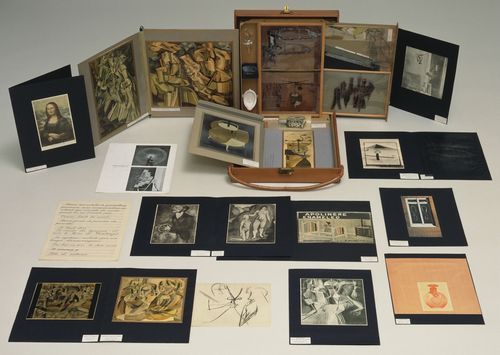
In 1935 Duchamp wrote to a patron that he was thinking of making "an album of approximately all the things I produced." The next year he embarked on the project, which lasted more than thirty years, and produced nearly 300 albums containing dozens of two– and three-–dimensional reproductions of his works an artist's version of a salesman's sample kit. The albums, which he titled De ou par Marcel Duchamp ou Rrose Sélavy (From or by Marcel Duchamp or Rrose Sélavy), are like miniature retrospectives of his career in personal, portable museums. When opened, the box becomes architectural, with three vertical "walls" and a "floor," and its unbound contents can be examined in any order the viewer wishes. The reproductions were supervised by Duchamp but made by others, using techniques (such as collotype, a labor-intensive process used to reproduce photographs) that reside somewhere between the mechanical and the handmade.
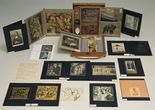
La Boîte-en-valise, 1936-1941/1968
Authorship is confused by the work's ambiguous attribution (to either Duchamp or his alter ego, Rrose Sélavy), and we are even given two ways to think about its creation: the passive "from" and the active "by." This work is often cited as the catalyst for artists' burgeoning interesting in multiples during the 1960s, and it certainly inspired Fluxus artist George Maciunas to create unorthodox anthologies like the Fluxkit, which was packaged in a briefcase. Although made in multiple copies, such works were not seen as secondary documents. As Duchamp noted drily in 1952, "Everything important that I have done can be put into a little suitcase."
Joan Rothfuss in Walker Magazine (July 25, 2012)
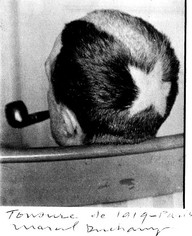
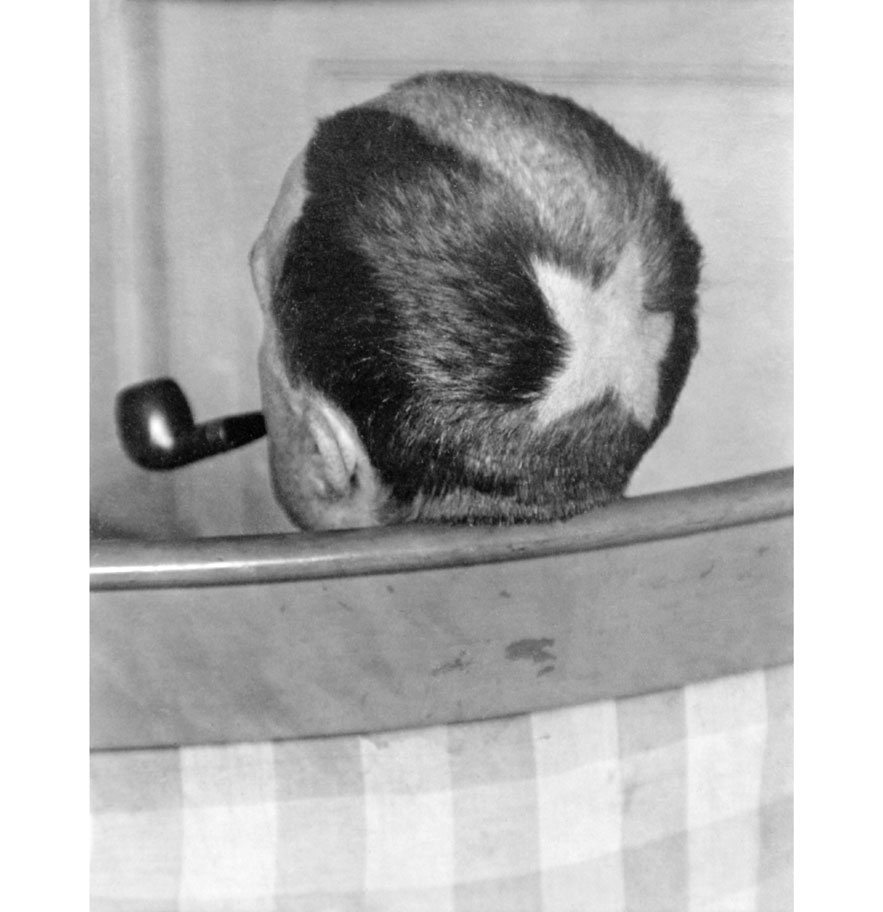
Tonsure. Photo by Man Ray - 1919
Some Ready-mades by Marcel Duchamp
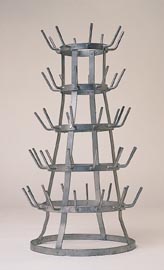
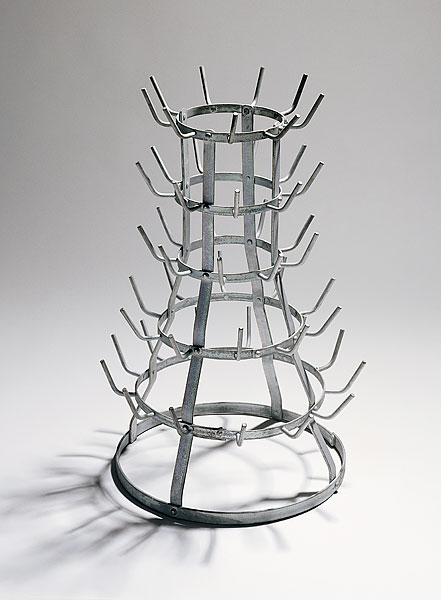
Bottle-rack - Porte-bouteilles (1914/1964)
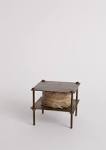
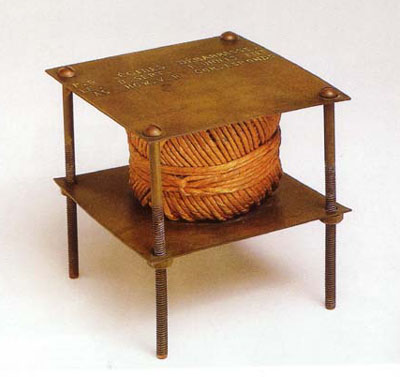
Hidden Noise / A bruit secret
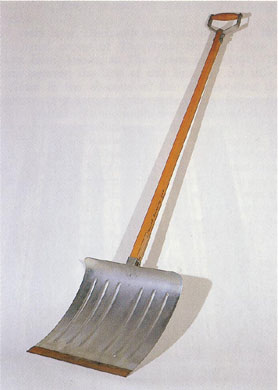
In Advance of the Broken Arm
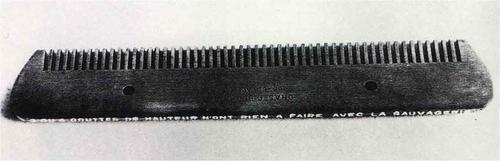
Comb / Peigne - 1916: "Quelques gouttes de hauteur n'ont rien à faire avec la sauvagerie"
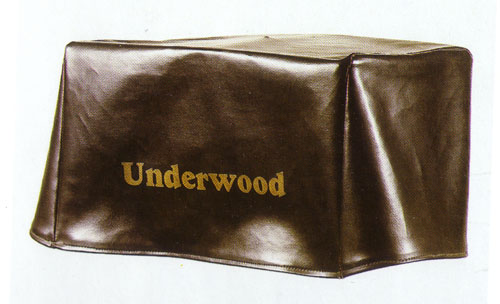
Underwood
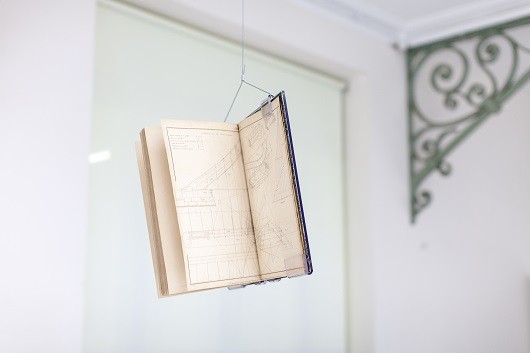
Unhappy ready-made/Ready-made malheureux
Marcus MOORE: Marcel Duchamp: "Twisting Memory for the Fun of It" or a Form of Retroactive Interference? — Recalling the Impacts of Leaving Home on the Ready-made
In the 1960s, Marcel Duchamp, arguably the most influential artist of the twentieth-century, came into real prominence and unprecedented fame. During this period he gave many interviews in which he often took a capricious stance. One topic was crucial: his comments concerning the origin of readymade works of art— mass-produced everyday objects that he first selected in 1913-1914 in Paris, and then after leaving in 1915 to New York he located other examples.
In interviews he referred to the ready-made as "a happy idea, but as material objects they signify and embody Duchamp's leaving home. When leaving home, an individual works through an acculturation process during which they are never truly settled. This article considers the fate of material objects in relation to the veracity of Duchamp's memory 50 years after the fact in the 1960s, a time when the artist was also the progenitor of a postmodern position.
Some of Duchamp's Works
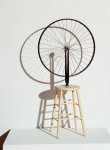
Bicycle Wheel - Roue de bicyclette (1913/1964)
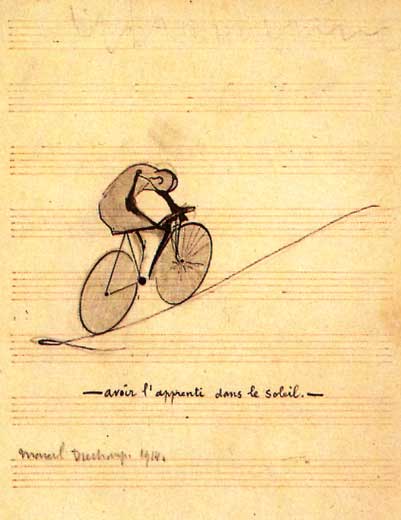
The recurrent bicycle theme...
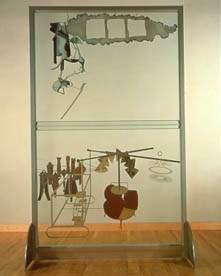
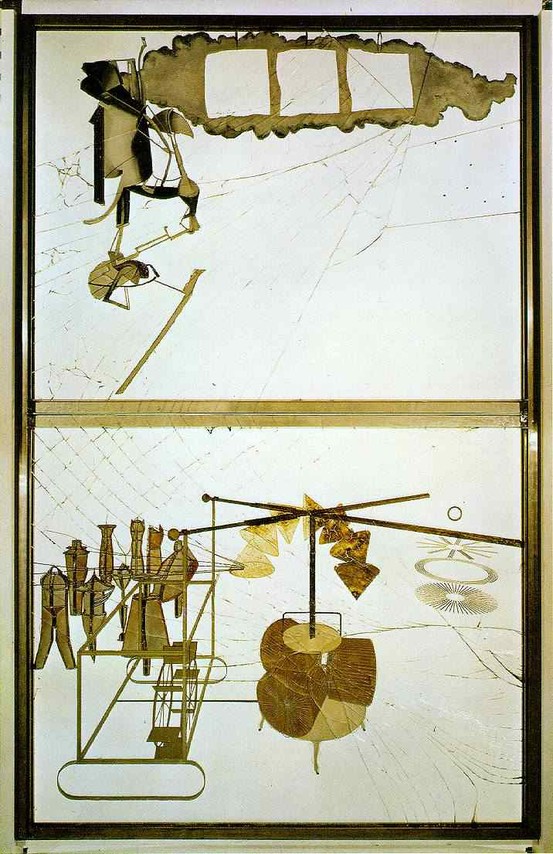
Le Grand Verre (The Bride Stripped Bare by her Bachelors, even / La Mariée mise à nu par ses célibataires, même)
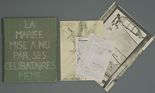
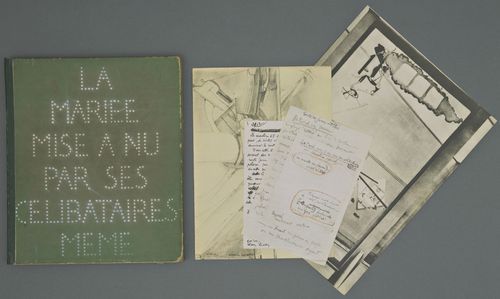
The Green Box / La Boîte verte (whose contents have been published in Duchamp du signe suivi de Notes)
Elena Filipovic:
One could say that everything begins and ends in Marcel Duchamp's studio. His first New York studio is perhaps best known from a series of small and grainy photos, some of them out of focus. They were taken sometime between 1916 and 1918 by a certain Henri-Pierre Roché, a good friend of Duchamp. Roché was a writer, not a professional photographer, clearly. He was the same guy who would go on to write Jules et Jim, arguably a far better novel than these are photographs. But their aesthetic quality was not really what mattered. Duchamp was attached to those little pictures. He kept them and went back to them years later, working on them and then leaving them out for us like his laundry in the picture. Or like clues in a detective novel.
Elena Filipovic is a writer and independent curator. She was co-curator, with Adam Szymczyk, of the 5th Berlin Biennial, When things cast no shadow (2008) and co-edited The Manifesta Decade: Debates on Contemporary Art Exhibitions and Biennials in Post-Wall Europe (2006). Recently she curated the first major solo exhibition of Marcel Duchamp's work in Latin America, at the Museu de Arte Moderna in São Paolo and the Fundacion Proa in Buenos Aires (2008-2009). She is tutor of theory/exhibition history at De Appel postgraduate curatorial training program and advisor at the Rijksakademie in Amsterdam. She is also currently guest curator of the Satellite Program of the Jeu de Paume in Paris for 2009-2010 and is completing a PhD at Princeton University on Marcel Duchamp's exhibition and installation practice.
Sophie Stévance - Les opérations musicales mentales de Duchamp. De la "musique en creux"
(Marcel Duchamp World Community)
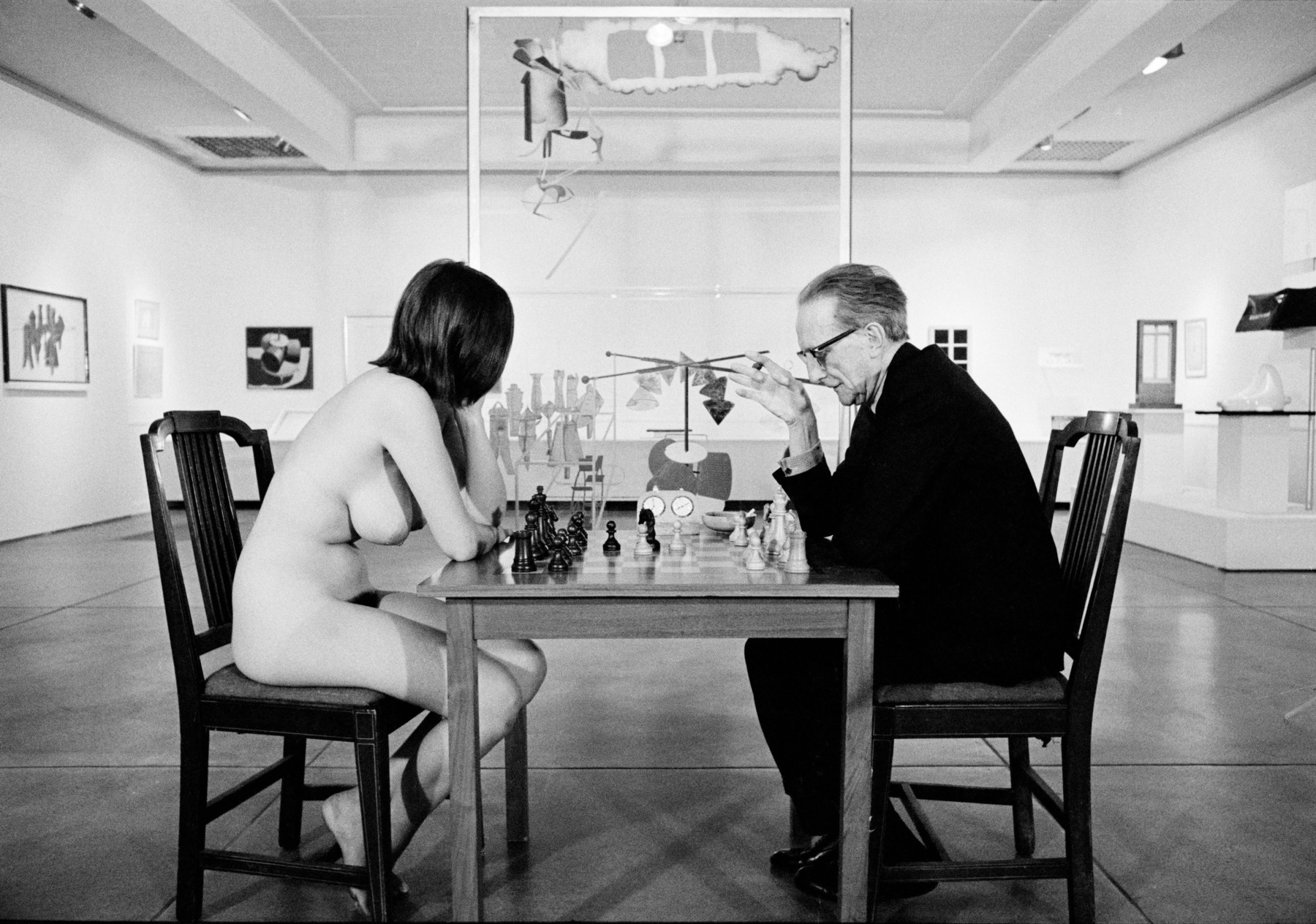
Marcel Plays Chess in Pasadena
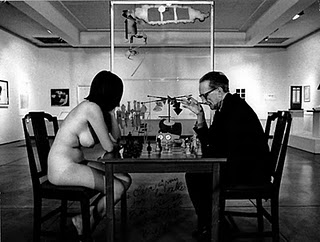
Photo : Julian Wasser
Photo of the chess match between a very properly dressed Marcel Duchamp and a nude Eve Babitz at the Pasadena Art Museum in 1963. She was taking her revenge for not having been invited to the inauguration of the exhibition. Not only had Duchamp attended the famous 1913 premiere of Igor Stravinsky's Rite of Spring in Paris, which had caused a riot, but the artist's young, buxom chess opponent was the daughter of Sol Babitz (a violinist who was a co-founder of the "Early Music Laboratory") and a grand-daughter of Stravinsky. Duchamp checkmated Eve at every game while discussing The Firebird at the same time.
[...] O.K., let's start with the Duchamp photograph: you, 20, naked, playing chess with him, 76, fully clothed. Eve, I have to tell you, that is one seriously boobalicious bod you've got going on there. I mean, hubba hubba.
Yes, I know. I'm normally a 36 double D. But that was the one time in my life I was on birth-control pills. My breasts blew up. They wouldn't fit into any of my dresses. And they, you know, they hurt. But they were —well, I thought they should be photographed, really.
How come?
So they were immortalized.
Because they were something else?
Yes. That's right.
And you were doing all this to make your married boyfriend [Walter Hopps] jealous, right?
Mm-hmm. Yes. Walter was great. He was the closest I ever got to the Jewish doctor that my grandmother always hoped I'd marry. [...]
by Lili Anolik in Vanity Fair, Fabruary 5, 2014
About thirty of Duchamp's works.
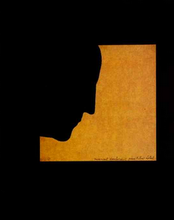
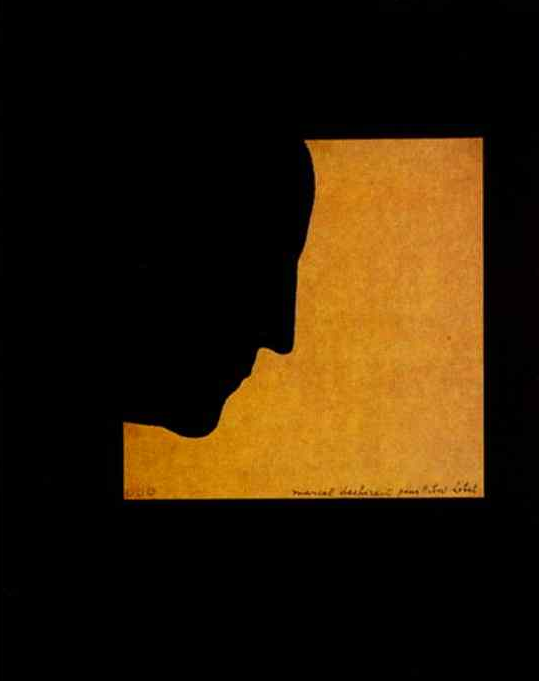
Self Portrait (1958)
From Notes on the Infra-Slim
a transformer designed to utilise the slight, wasted energies such as:
the excess of pressure on an electric switch
the exhalation of tobacco smoke
the growth of hair, of other body hair and of the nails
the fall of urine or excrement
movements of fear, astonishment, boredom, anger
laughter
dropping of tears
demonstrative gestures of hand, feet, nervous ticks
forbidding glances
falling over with surprise
stretching, yawning, sneezing
ordinary spitting and of blood
vomiting
ejaculation
unruly hair, cowlicks
the sound of nose-blowing, snoring
fainting
whistling, singing
sighs, etc [...]
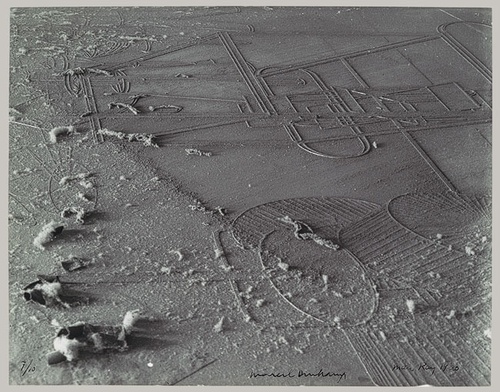
Dust Raising - Elevage de poussière (Photo by Man Ray - 1920)
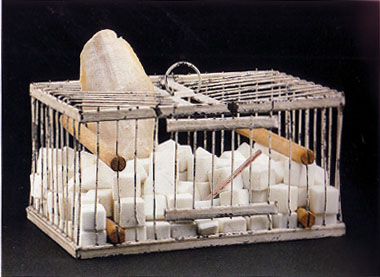
Why Not Sneeze?
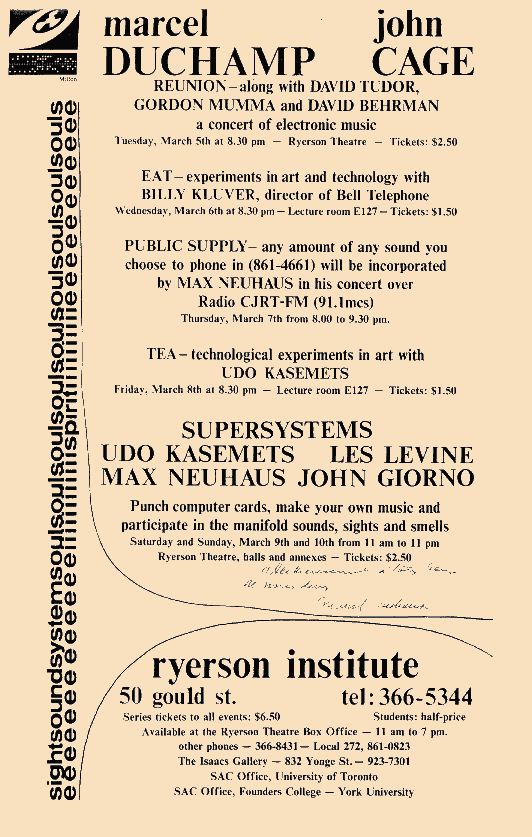
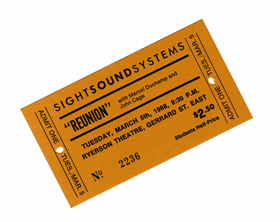
Marcel Duchamp - John Cage: Reunion
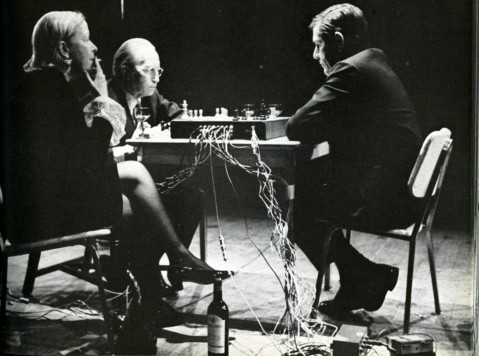
Actually, Cage hadn't lost every single match with Duchamp. There was one that he definitely won, after a fashion. It happened in Toronto, in 1968. Cage had invited Duchamp and Teeny to be with him on the stage. All they had to do was play chess as usual, but the chessboard was wired and each move activated or cut off the sound coming live from several musicians (David Tudor was one of them). They played until the room emptied. Without a word said, Cage had managed to turn the chess game (Duchamp's ostensive refusal to work) into a working performance. And the performance was a musical piece. In pataphysical terms, Cage had provided an imaginary solution to a nonexistent problem: whether life was superior to art. Playing chess that night extended life into art –or vice versa. All it took was plugging in their brains to a set of instruments, converting nerve signals into sounds. Eyes became ears, moves music. Reunion was the name of the piece. It happened to be their endgame.
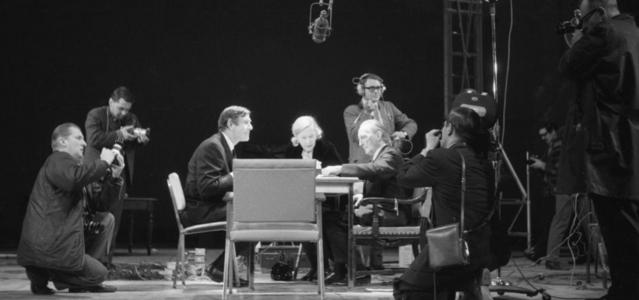
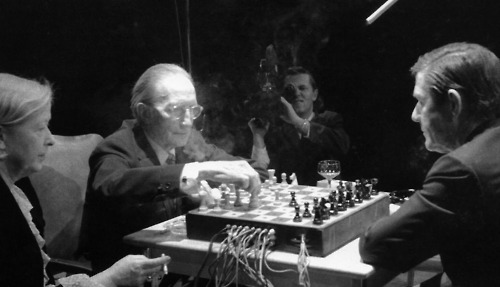
Teeny Duchamp, Marcel Duchamp and John Cage in Toronto, March 5, 1968
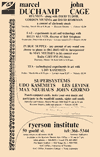 Unpublished poster of the meeting. (Private collection) Unpublished poster of the meeting. (Private collection)
|
 |
Reunion: John Cage, Marcel Duchamp, Electronic Music and Chess
The year 1999 marks the thirty-first anniversary of Reunion, a performance in which games of chess determined the form and acoustical ambience of a musical event. The concert—held at the Ryerson Theatre in Toronto, Canada— began at 8:30 on the evening of 5 March 1968, and concluded at approximately 1:00 the next morning. Principal players were John Cage, who conceived (but did not actually "compose") the work; Marcel Duchamp and his wife Alexina (Teeny); and composers David Behrman, Gordon Mumma, David Tudor and I, who also designed and constructed the electronic chessboard, completing it only the night before the performance. Except for a brief curtain call with Merce Cunningham and Dance Company in Buffalo, NY the following month, Duchamp made his last public appearance in the role of chess master— in Reunion.
Misconceptions
In the intervening 31 years, more fiction than fact regarding Reunion has appeared in documents about Cage and Duchamp, even from the pens of authors with prestigious reputations. Nicolas Slonimsky wrote in the 1978 edition of Baker's Biographical Dictionary of Musicians: He [Cage] also became interested in chess and played demonstration games with Marcel Duchamps [sic], the famous painter turned chessmaster, on chessboards designed by Lowell Cross to operate on aleatory principles with the aid of a computer and a system of laser rays.
By Lowell Cross
Performed by Eliza McCarthy, prepared piano.
"Three Minute Wonder" by Mike Figgis. Must-see video on and about Duchamp's "Fountain".
It's definitely true that some things are funnier in English than they are in French and vice versa. I mean Duchamp was very well aware of this. Certain of his puns are totally untranslatable. Or they may be translatable but they still don't have the impact in translation because there'll be a nuance, a nuance or maybe just through French usage that will not translate or will be not come across.
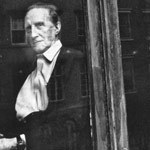
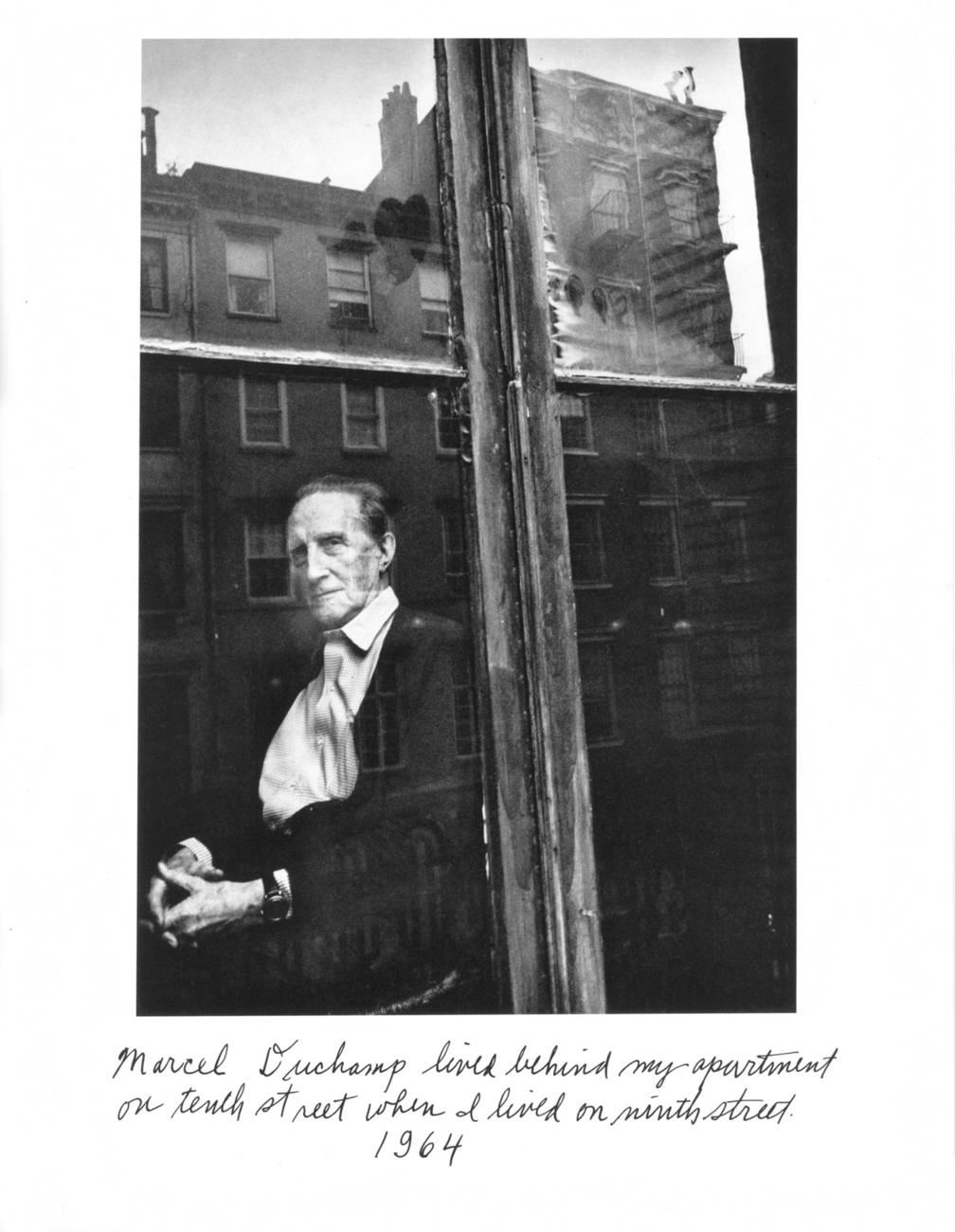
Photo of M.D. by Duane Michals - 1964
Copley's relationships with the surrealists were some of the most important and formative on his development as a person and an artist. He remained close friends with René Magritte, Man Ray, Max Ernst, and of course Marcel Duchamp. Marcel Duchamp died on October 2, 1968. He had been living primarily in New York since Copley met him in 1947. Copley was a frequent visitor to Duchamp's studio on Fourteenth Street once he returned to New York after his years in France. Upon Duchamp's death The William and Noma Copley Foundation (later the Cassandra Foundation) gave Marcel Duchamp's last work, "Etant Donnée" to the Philadelphia Museum of Art, where it is still on view. Copley had been one of the few people who knew that Duchamp was working on such a piece, and a major supporter of the work. William Copley's moving obituary of Duchamp that appeared in the New York Times on October 13, 1968 reflects the importance that Marcel had in his life:
Because I knew him, I find it inconceivable to speak of Marcel Duchamp as no longer living. For those who missed the point of his greatest statement, he has not been among them since he officially ceased painting years ago. Though he did not die that long ago he did define eternity, and he entered immortality at the time he left the easel and took art with him into creative life.
Had he been unwilling to share the experience, this would have been a fulsome obituary- and this is not an obituary.
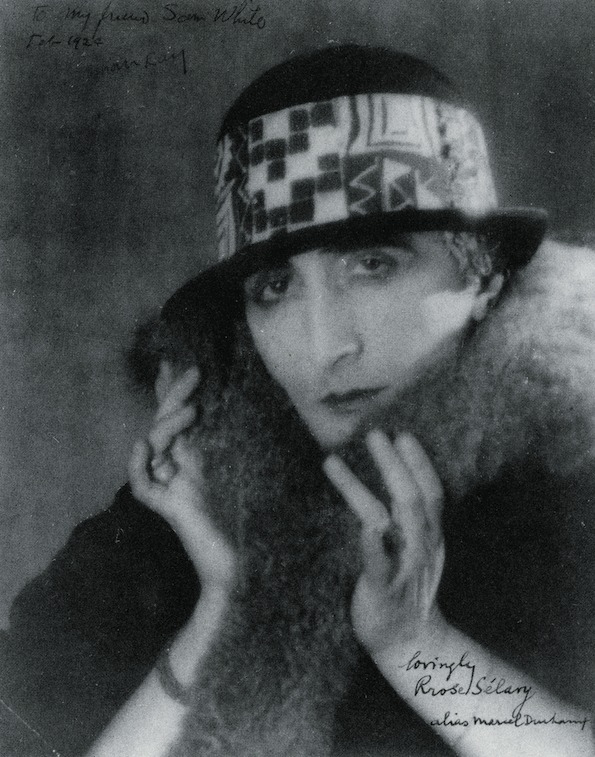
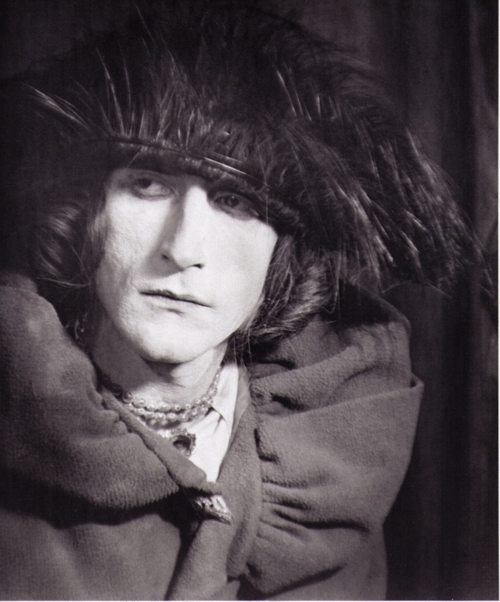
Rrose Sélavy (1921) by Man Ray. The name is a humorous pun on the words "Eros, c'est la vie", which means "Sex, that's life".
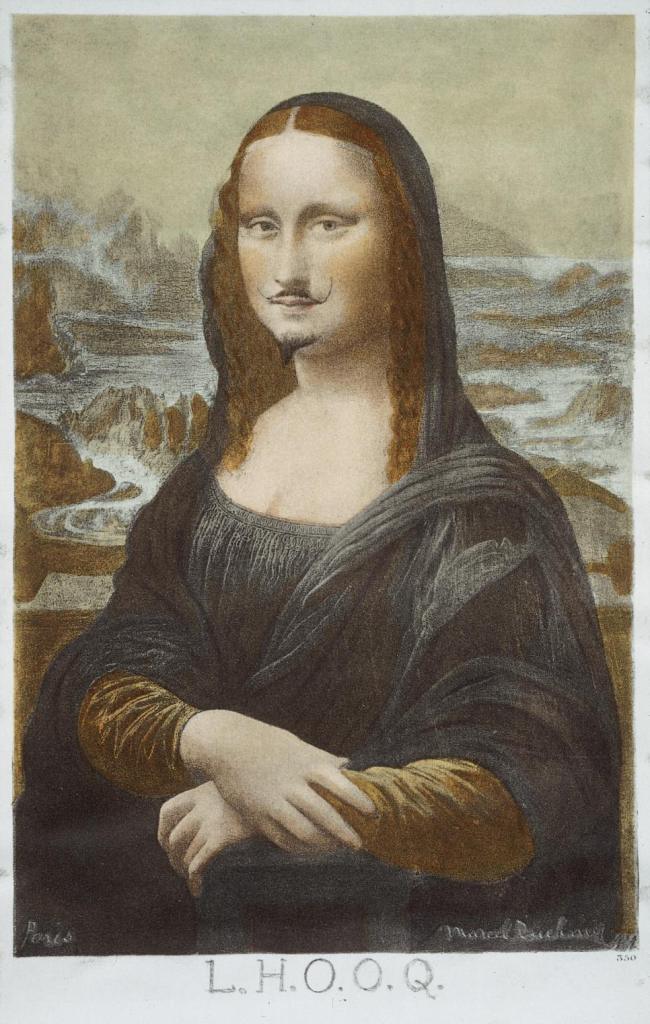
L.H.O.O.Q.
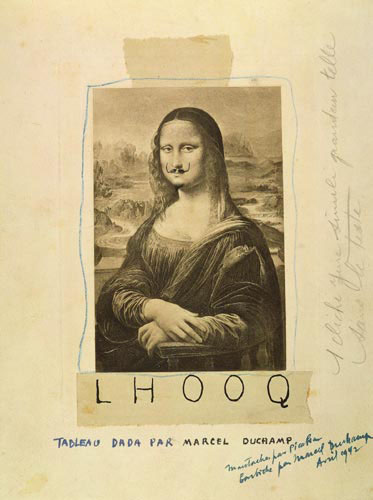
Here is the story of this "work of art" : in 1919, at the height of Dada activities in Paris, Duchamp took an inexpensive colour reproduction of Leonardo da Vinci's Mona Lisa, enhanced her smile with a moustache and goatee, on which he pencilled five letters : L.H.O.O.Q. (a pun -- "Elle a chaud au cul"), although Duchamp himself once politely translated it as "There is fire down below".
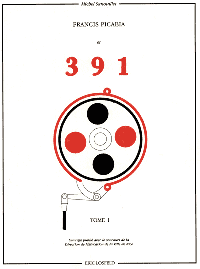
Duchamp's fellow dada co-conspirator, Francis Picabia, hoped to publish it in his magazine 391, couldn't have waited for the artifact to come back on time from New York, so he himself drew the moustache on Mona Lisa but forgot the goatee! But Picabia wrote at the bottom "tableau Dada par Marcel Duchamp". Duchamp of course was the first one to discover the missing goatee and this became a subject for his teasing of his friend.
Some twenty years passed before he would be given the opportunity to rectify this omission. In the early 1940's, the original Picabia replica of L.H.O.O.Q. mysteriously resurfaced, found in a bookstore by Jean Arp, another dada artist. Duchamp seized the opportunity to "complete" the image by carefully adding in black ink the goatee and using a blue fountain pen to write "moustache par Picabia / barbiche par Marcel Duchamp / avril 1942".
by Jeffrey Shivar
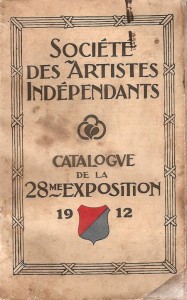 The 1913 art exhibit that scandalized New York
Article in Ephemeral New York on the Armory Show.
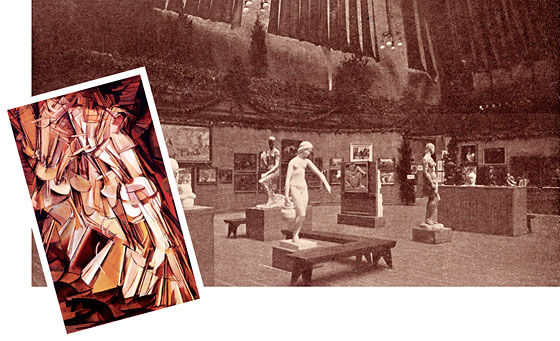
"Chaos at Armory Show" by Jerry Saltz
(published April 1, 2012 in New York Magazine)
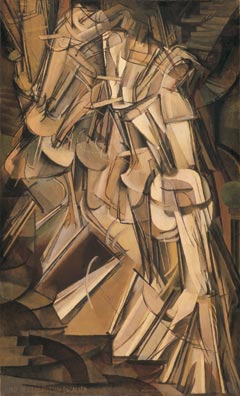
Nude Descending the Staircase / Nu descendant l'escalier
Happy Birthday Eadweard Muybridge!
Interesting article + a short film about the photographer who perhaps inspired Duchamp's Nu descendant un escalier.
(April 9, 2012)
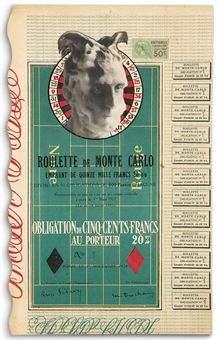
Miami Gallery Acquires Rare Marcel Duchamp Print
AffordableArt101 Fine Prints announced the acquisition of a rare lithograph by French artist Marcel Duchamp. Printed in 1938 and issued in Paris by the deluxe art revue "XXe Siecle", the piece is called "Monte Carlo Bond" and is also known as "Obligation Monte Carlo". Measuring 12 1/2 x 9 inches, the lithograph shows the infamous portrait of Duchamp taken by photographer Man Ray, superimposed onto a roulette wheel, with a casino gaming table in the background. [...]
(November 14, 2012)
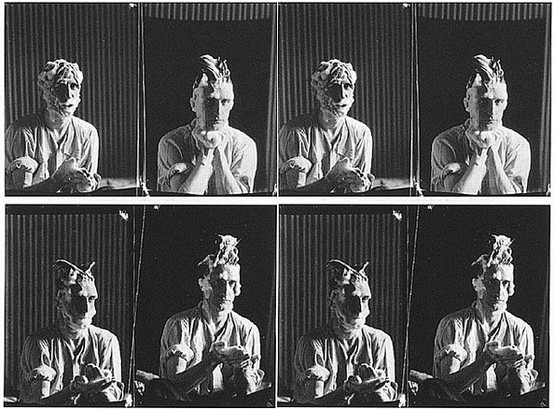
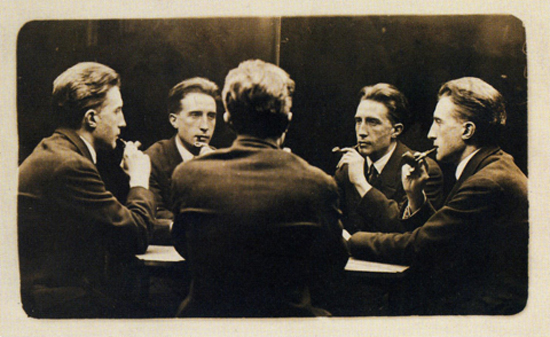
Man Ray - Portraits of Marcel Duchamp (1924)
Marcel Duchamp's Dandyism : The Dandy, The Flaneur and The Beginnings of Mass Culture in New York during the 1910s
Marcel Duchamp World Community (MarcelDuchamp.Net)
The Marcel Duchamp World Community Web Site offers a neutral, unbiased, internet location for the meeting and exchange of ideas among the international community of people interested in Marcel Duchamp studies. The site welcomes news, events, publications, papers -- anything related to Marcel Duchamp and his larger circle of friends in Dada and Surrealism.
The Artworks of Marcel Duchamp
in 15 themes + a biography on WahooArt (an exceptional site).
Dada without Duchamp / Duchamp without Dada
An intelligent and well documented article by professor Marjorie Perloff.
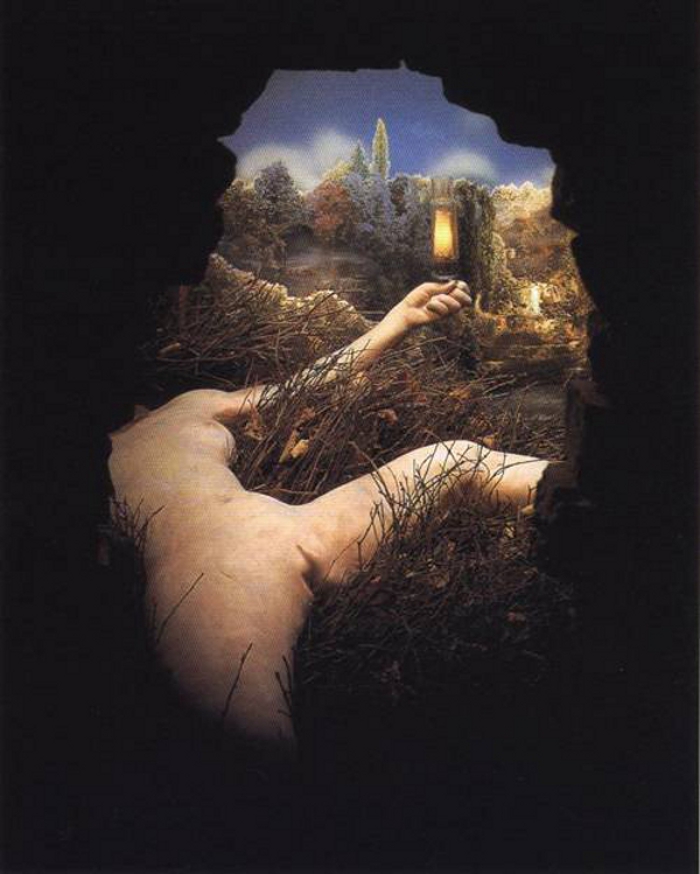
Encounter with Marcel Duchamp
Includes a reproduction and an explanation of Étant donné, the important dates in Duchamp's life as well as other unpublished treasures.
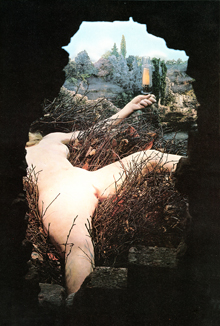
Étant donnés (Given)
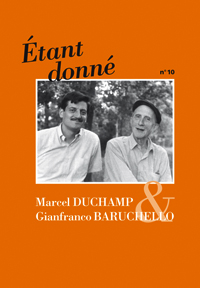 Étant Donné Marcel Duchamp
Presentation and table of contents of the excellent periodical devoted to Duchamp, Étant Donné.
Marcel Duchamp and the Machine
by Alan Foljambe
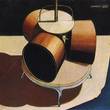
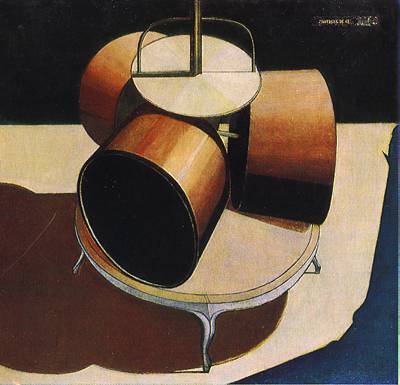
An early example of Duchamp's attraction to machine form is Chocolate Grinder.
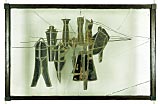
Neuf Moules Mâlic, 1914-1915
Marcel Duchamp 'FOUNTAIN' - IS IT ART?
This is the second of four short films made for Channel 4 / Tate modern about modern and conceptual art. We took the art and put it in a different space or context and asked people to comment. In this episode we took Marcel Duchamp's 'FOUNTAIN' and placed it in a public toilet. The mandatory, 'is it art' discussion followed!
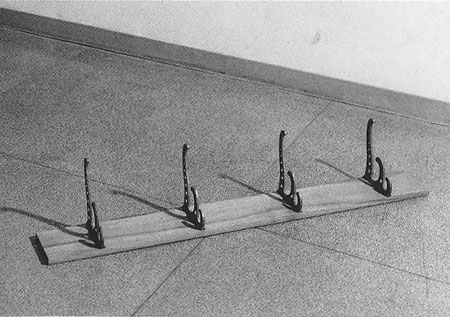
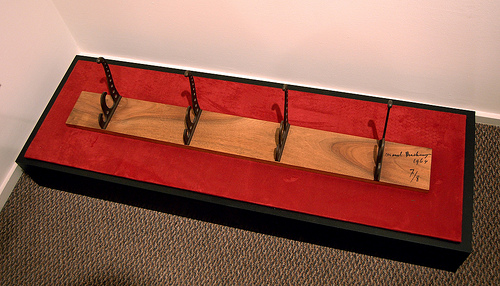
Trébuchet (Trap) - 1917
a coat rack the artist ironically nailed to the floor of his studio in reference to a critical chess position.
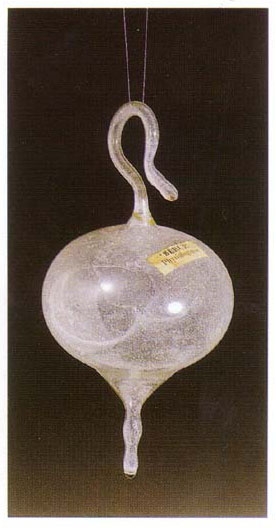
50 cc of Paris air - 1919
Philadelphia Museum of Art
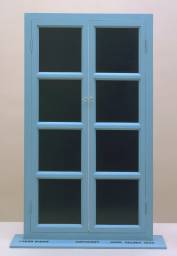
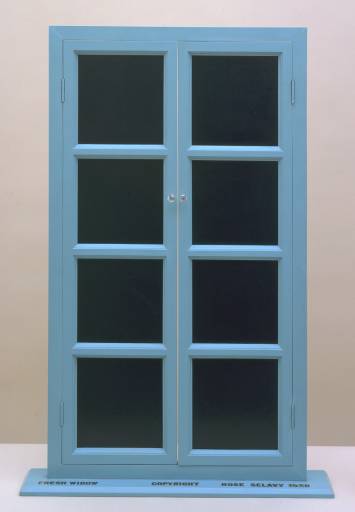
Fresh Widow, 1920/1964
Constructed by a carpenter in accordance with Marcel Duchamp's instructions, Fresh Widow is a small version of the double doors commonly called a French window. Duchamp was fascinated by themes of sight and perception; here, the expectation of a view through windowpanes is thwarted by opaque black leather, which Duchamp insisted "be shined everyday like shoes." Windows had an important place in the work of Duchamp, who stated, "I used the idea of the window to take a point of departure, as... I used a brush, or I used a form, a specific form of expression.... I could have made 20 windows with a different idea in each one...."
Puns and wordplay were also central to Duchamp's work. By changing a few letters, Duchamp transforms "French window" -- which the work resembles in form— -- into "Fresh Widow," a reference to the recent abundance of widows of World War I fighters.
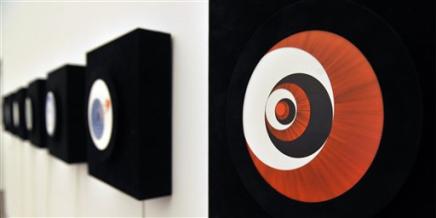
Rotoreliefs
Several editions were issued: 1935 Paris, 1953 New York, 1959 Paris, 1963 New York, 1965 Milan.
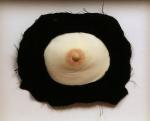
Prière de toucher, 1947
BRETON, André & DUCHAMP, Marcel (editors). Le surréalisme en 1947. Exposition du Surréalisme, présentée par André Breton. 139, (3) pp., 44 collotype plates with numerous illus., and 24 original prints hors texte: Lrg. 4to. Plain paper wraps.
Chemise: pink boards, mounted with a tinted foam-rubber Readymade breast construction by Duchamp, encircled by a hand-trimmed black velvet cut-out.
"Back in New York, Duchamp came up with an idea for the cover, which to a certain measure was derived from the collage he had made for the catalogue of the First Papers of Surrealism exhibition in 1942: a woman's bare breast encircled by a swath of black velvet fabric entitled "Prière de toucher" ("Please touch"). For the regular edition, a black-and-white photograph of this subject was prepared in accordance with Duchamp's instructions by Rémy Duval, a photographer from Rouen best known for a book of nudes published in Paris in 1936. For the deluxe edition, actual foam rubber falsies were painted and glued to a pink cardboard cover by Duchamp with the assistance of the American painter Enrico Donati. 'By the end we were fed up but we got the job done,' Donati later recalled. 'I remarked that I never thought I would get tired of handling so many breasts, and Marcel said, 'Maybe that's the whole idea'" (Naumann). Paris (Pierre à Feu/ Maeght), 1947. $35,000.00 (Ars Libri)
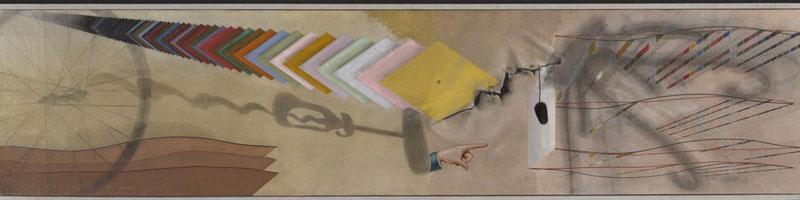
In 1918, after painting the work you see here, Marcel Duchamp, one of the three most influential artists of the 20th century -— the others being Matisse and Picasso -— never painted again.
What a thing to contemplate!
The picture, which is in the collection of the Yale University Art Gallery, was commissioned from Duchamp by his wealthy patron, Katherine Dreier. It is titled Tu m', which is believed to be an abbreviation of "Tu m'embêtes" ("You bore me") or perhaps even "Tu m'emmerdes" ("You give me the [expletive]."
The painting presents, in shadow form, a corkscrew, a hat rack, and a small inventory of Duchamp's so-called readymades, which he had been producing (if that is the right word —- perhaps simply "signing"?) since 1913.
There are also three safety pins stuck through a painted tear, a long bottle brush protruding from the picture at right angles, a bolt, a human hand with a pointing finger that was painted by a professional sign painter, and a staggered series of paint color swatches. [...]
By Sebastian Smee in The Boston Globe on October 7, 2014
Making Sense of Marcel Duchamp
Interactive animated chronicle which brings to life the ideas and influences at the source of Duchamp's art.
Marcel Duchamp News - The New York Times
News about Marcel Duchamp, including commentary and archival articles published in The New York Times.
Witch's Cradle (1943)
Rare silent film by Maya Deren with Marcel Duchamp.
Part 1
Part 2
Her memoirs, published for the first time in Britain, portray a desperate liaison. Excerpts in The Independent, 11/02/08.
A website containing 9 superb photos of Marcel Duchamp or his works.
An enormous if somewhat repetitive collection of Duchampiana.
The Allen Ginsberg Project
On the occasion of the 43rd anniversary of Duchamp's death, an excellent collection of interview footage and Duchampiana.
As an artist, Marcel Duchamp is hard to classify – but he almost certainly wanted it that way. During his career, just when everyone thought they knew what he was, a Cubist, for example, or a Surrealist, he switched to another style or no-style, left town or the country or stopped being an artist and went off and played chess in tournaments.
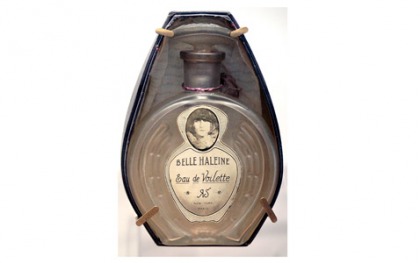
Duchamp would have been disgusted...
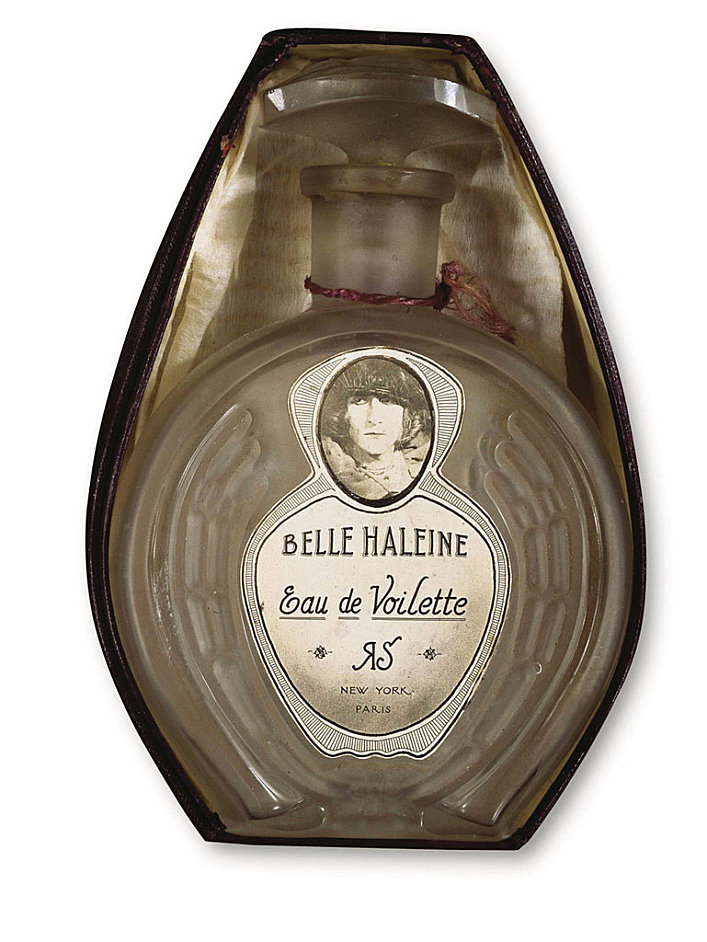
This bottle of perfume « Belle Haleine - Eau de Voilette » and its cardbord container signed Marcel Duchamp were sold at auction for 7,9 million euros to the public's applause.
Duchamp's Last Ready-made
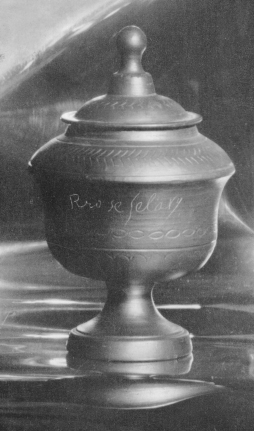
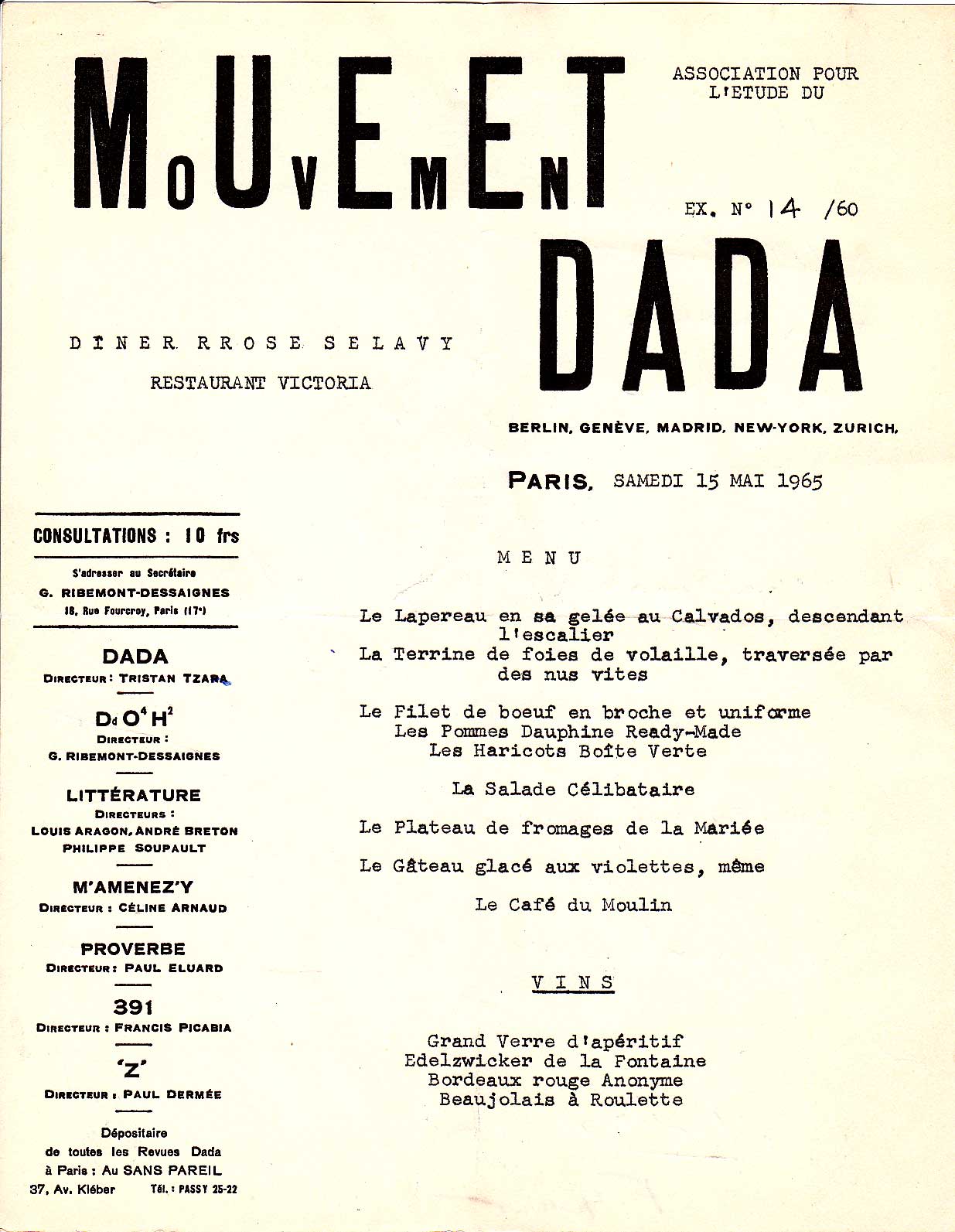
Marcel Duchamp flicked the ashes of his cigar into this urn during the Rrose Sélavy dinner on May 15, 1965. Click to see the menu.
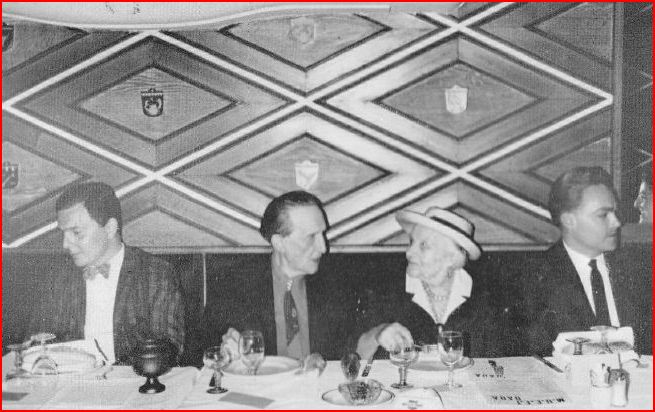
This photo was on the inside cover of the first issue of the Revue de l'Association pour l'Etude du Mouvement Dada (October 1965). The urn is a provoked ready-made which contains Marcel Duchamp's ashes, fallen directly from his cigar during the Rrose Sélavy dinner which reunited thirty members of the association around Duchamp on Saturday, May 15, 1965 at the Victoria restaurant in Paris. Since the minutes recording the contents of the urn were read by the president, [Michel Sanouillet] and then burned in the urn at Duchamp's request, its contents remain mysterious.
Among those present were, from left to right, Jacques Fraenkel (Théodore Fraenkel's nephew), Marcel Duchamp, Mme Gabrielle Buffet-Picabia and Rodrigo de Zayas (Marius de Zayas's son).
Photo Jampierre